
How Large Artwork Changes the Feeling of a Room
There is something about large artwork that changes how a space feels before you even begin to consciously notice it.
A room can feel calmer, more open, or more grounded simply because of what occupies the wall. Large pieces tend to affect a space differently than smaller artwork does. They carry more visual weight, but they also change scale itself — altering how the room is experienced as a whole rather than simply adding decoration to it.
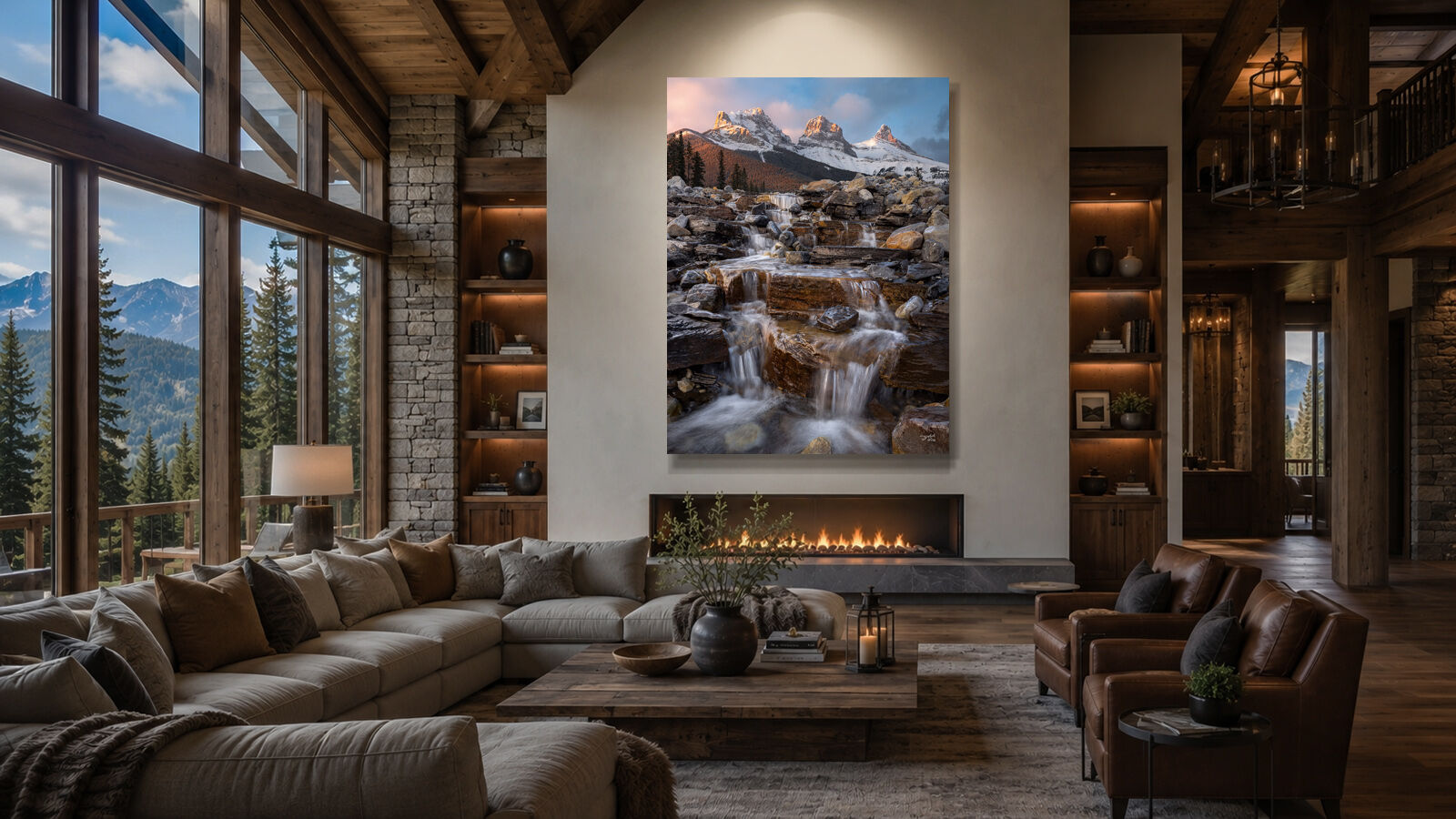
That effect is not tied to one specific subject. A mountain landscape can create a sense of distance and quiet, while a forest scene might feel immersive and enclosed. Open prairie introduces space in a completely different way, and abstract water reflections can soften a room almost like changing the quality of light within it.
What matters most is usually not the subject alone, but the atmosphere the image carries once it becomes part of the room.
Scale Changes How We Experience an Image
When a photograph is small, it is viewed. When it is large, it is entered into.
At smaller sizes, an image is taken in all at once. Printed large, the experience becomes slower and more physical. The eye begins moving through the photograph instead of simply scanning it.
Textures become easier to notice. Light transitions hold more depth. Areas that might disappear on a screen suddenly become part of the atmosphere of the image itself.
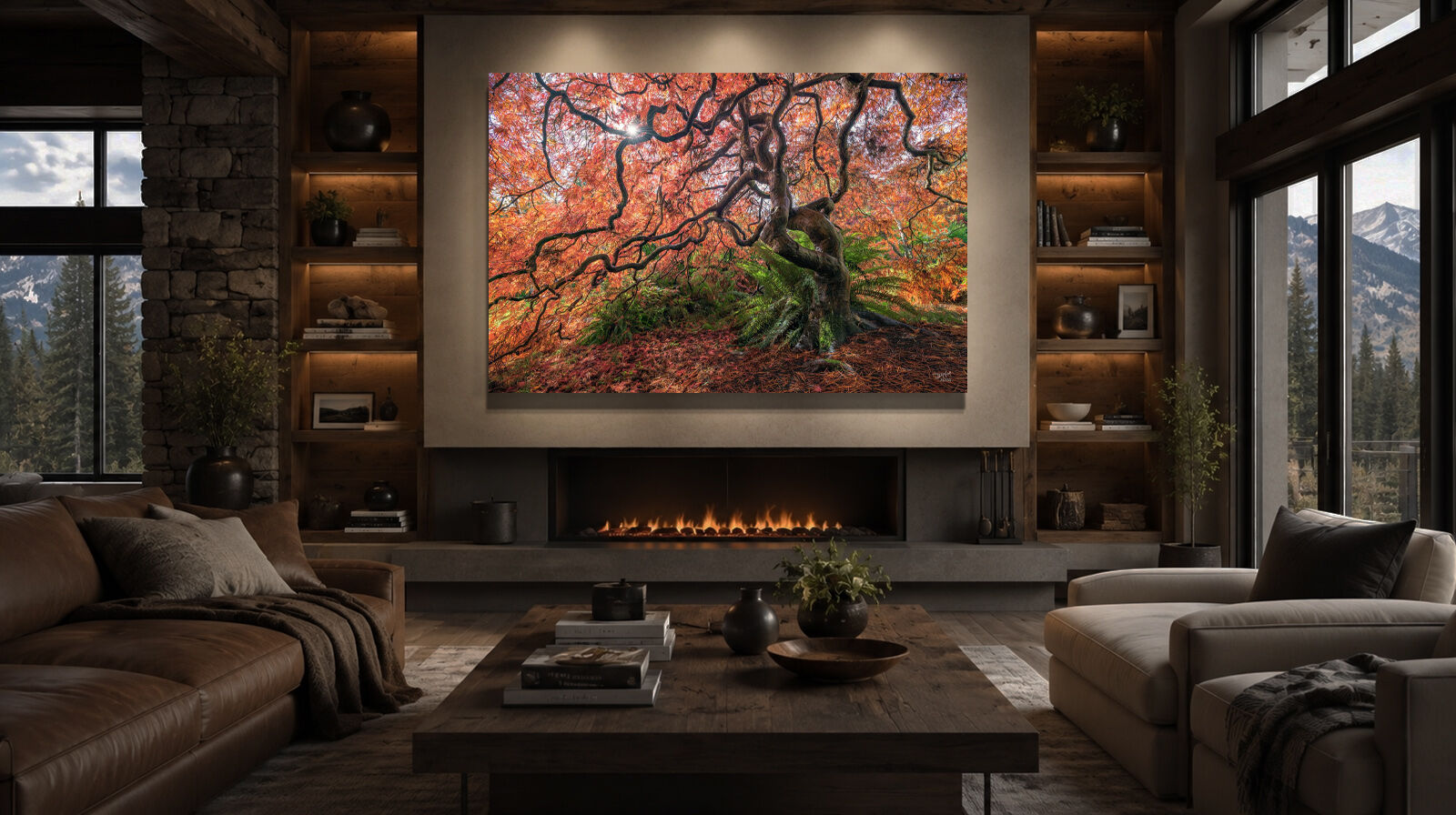
A dense forest scene can feel immersive when printed wall-sized, while a prairie landscape may create the opposite effect — openness, distance, and visual breathing room. Waterfalls tend to introduce movement and rhythm into a space, especially when the motion of water is rendered softly enough that it feels atmospheric rather than literal.
Even abstract landscapes begin behaving differently at scale. They stop feeling descriptive and start functioning more like mood or texture within the room.
The Subject Changes the Atmosphere
Different landscapes influence a room in different ways.
Some images create energy and contrast, while others quiet a space down. Volcanic terrain and lava scenes often feel dramatic and alive, carrying warmth, movement, and intensity into an interior.
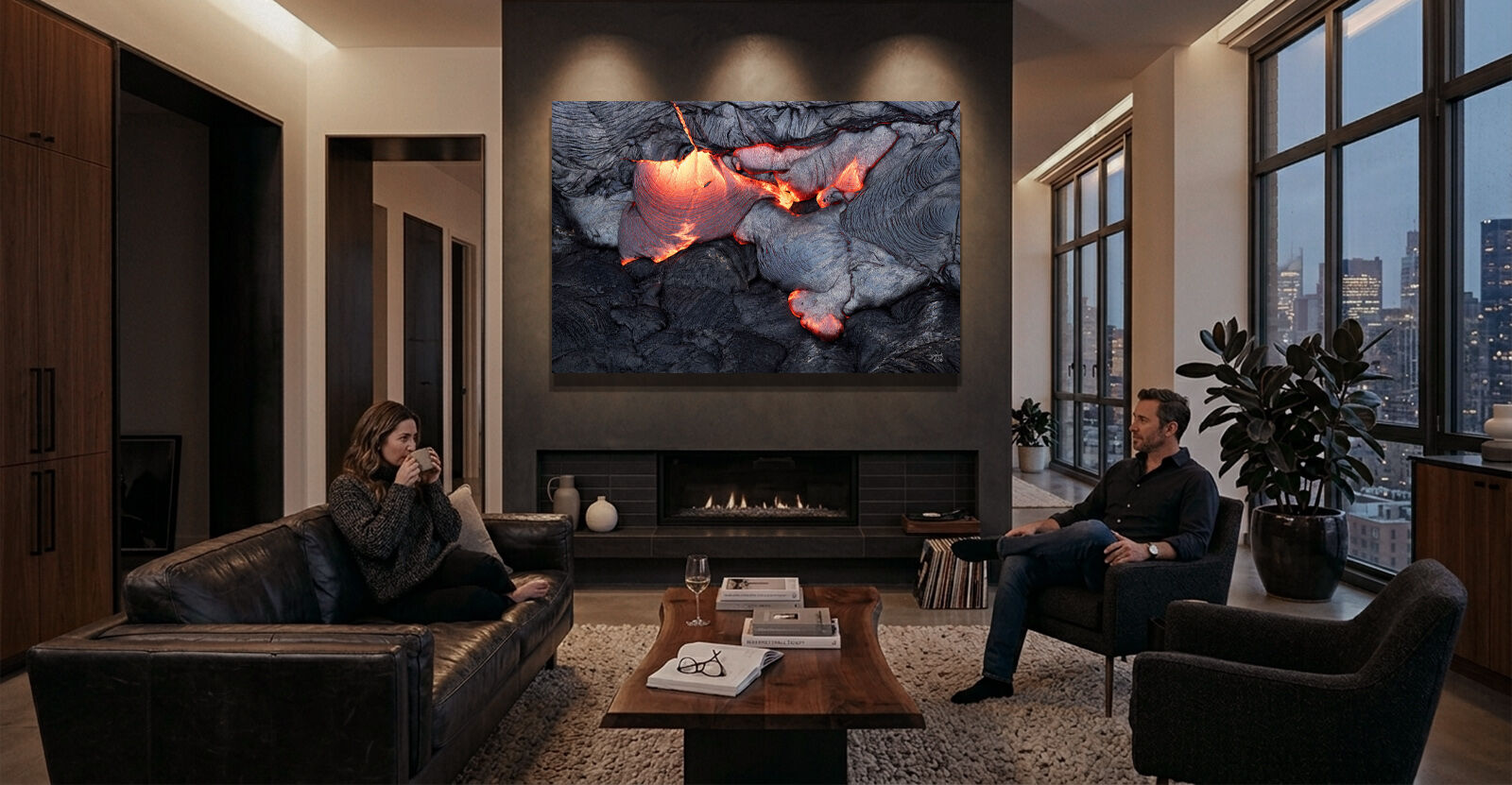
Mountain scenes usually introduce structure and distance — something steady and grounding. Forest imagery can feel enclosed and calm, while waterfalls add movement and softness that change the rhythm of a room without overwhelming it.
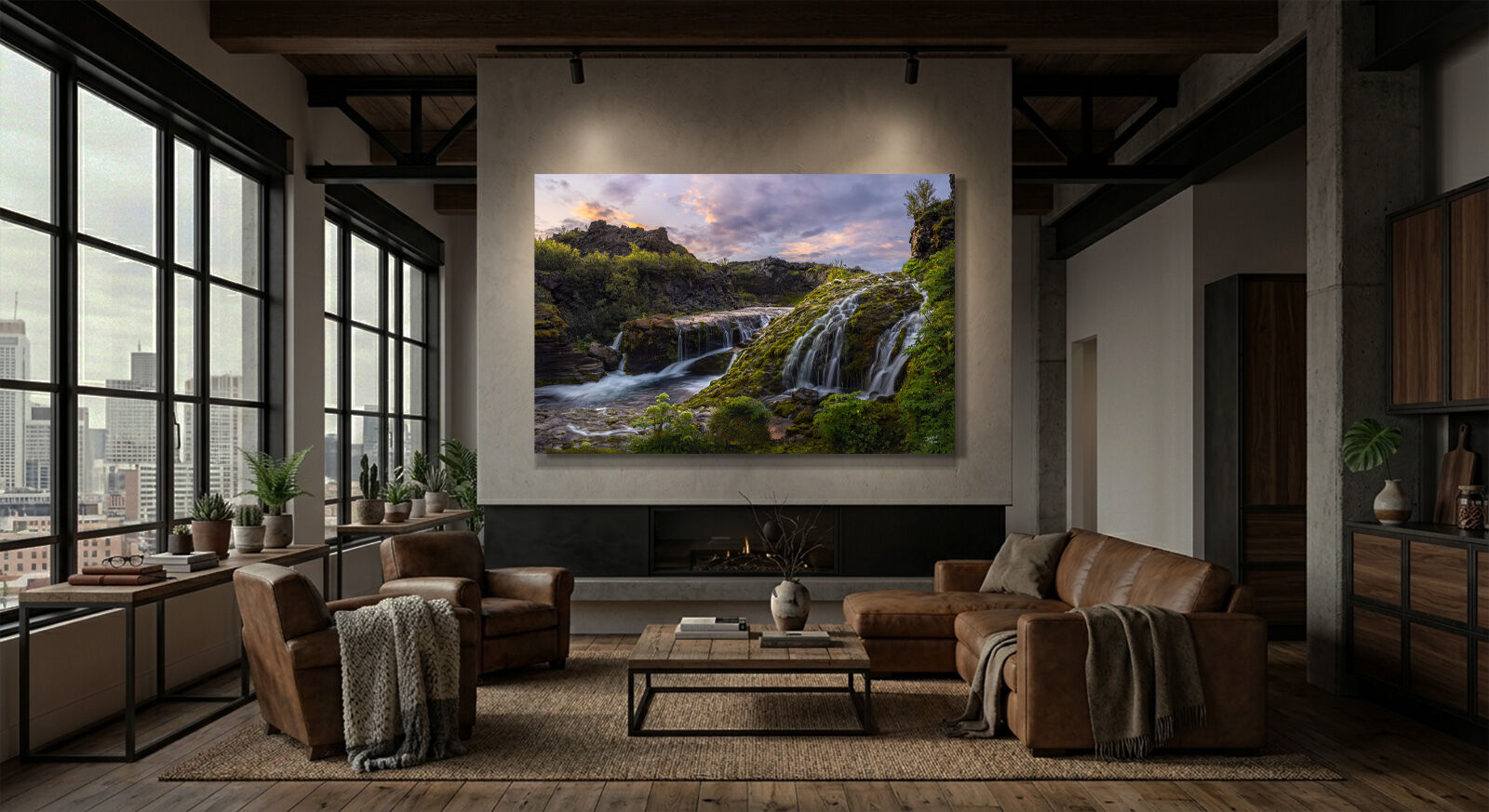
Abstract landscape photography behaves differently again. When detail is reduced into reflections, motion, light, or texture, the image often becomes less about place and more about atmosphere. At larger sizes especially, those pieces can feel almost architectural in the way they interact with a space.
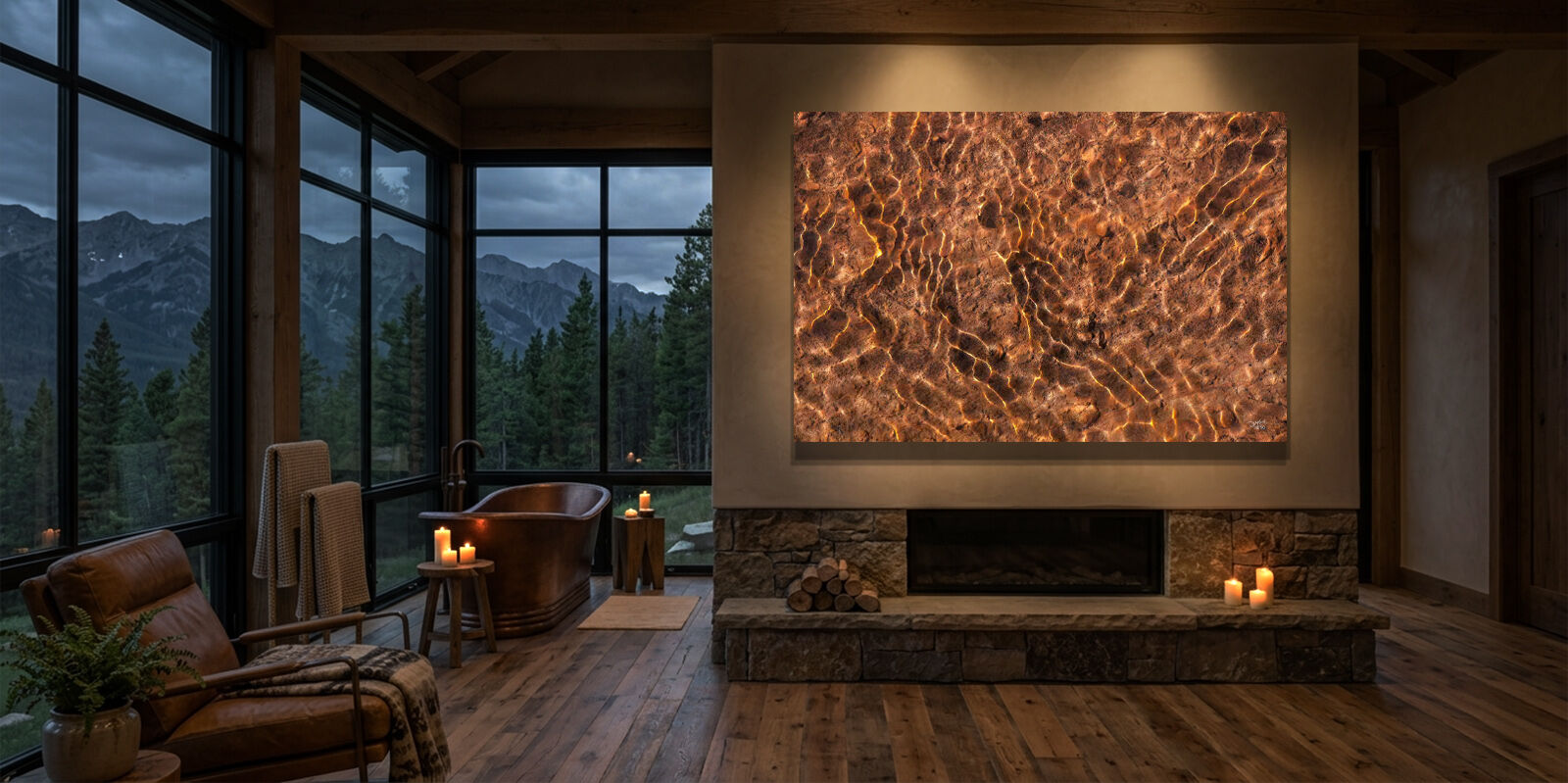
Why Large Artwork Changes Interior Space
A room is shaped not only by its architecture, but by where the eye naturally settles.
Large artwork becomes part of that structure. It influences how spacious a room feels, how visually quiet it feels, and even how the surrounding furniture and materials are perceived.
In some interiors, a large photograph introduces calm simply by reducing visual fragmentation. In others, it creates depth by extending the sense of space beyond the physical wall itself.
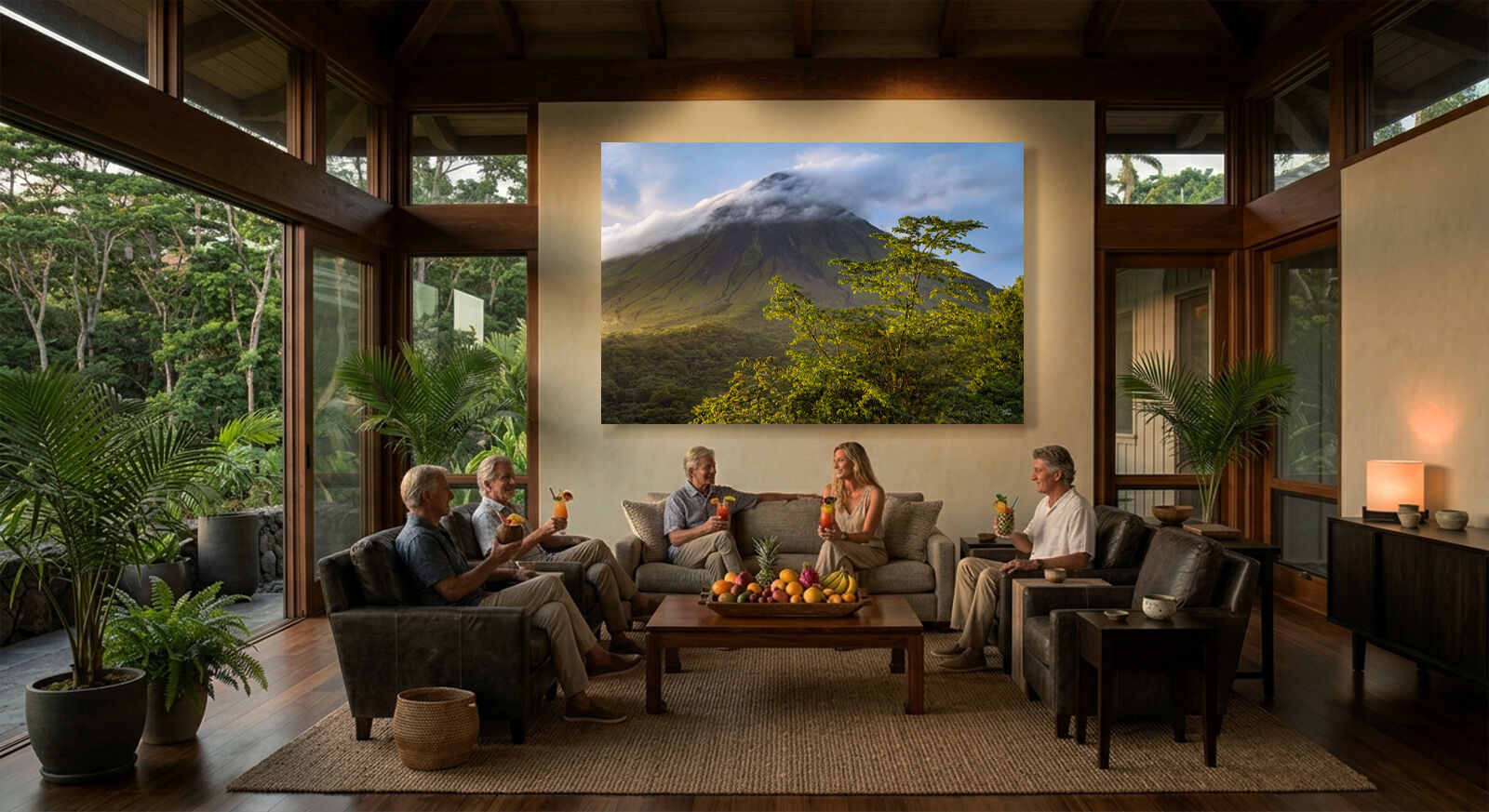
A wide landscape can make a room feel more open. A darker, moodier scene may create intimacy and warmth. High-contrast imagery can anchor an otherwise minimal interior without the need for additional visual clutter.
The same image printed small rarely carries the same effect. Scale changes not only the photograph itself, but the way the entire room is experienced around it.
Atmosphere Matters More Than Subject
A waterfall photograph is rarely compelling because of the subject alone. What gives it presence is usually the atmosphere surrounding it — the quality of light, the softness or force of the water, the surrounding weather, and the way the scene was composed in the moment it was captured.
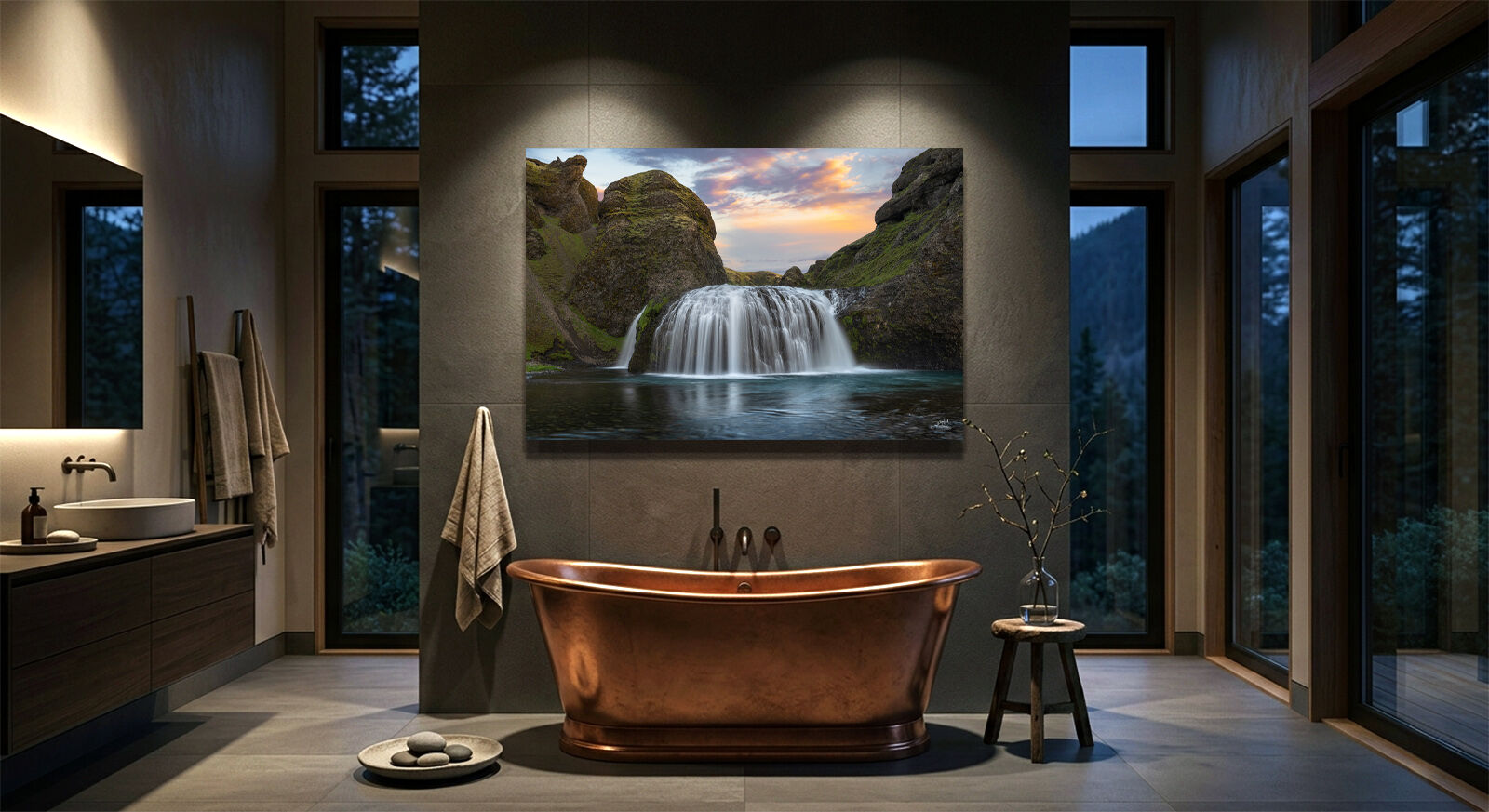
At larger sizes especially, that atmosphere becomes more physical. It fills more of the viewer’s peripheral vision and changes the overall mood of the room itself. Some images introduce stillness. Others create energy, openness, softness, or a sense of escape.
This is where photography begins to function less as simple image-making and more as environmental presence.
Living With Large-Scale Work
Large artwork changes over time once it becomes part of a home.
What initially feels visually striking often becomes quieter and more familiar with repeated viewing. The image settles into the rhythm of the room itself, becoming part of the atmosphere people experience daily without consciously focusing on it all the time.
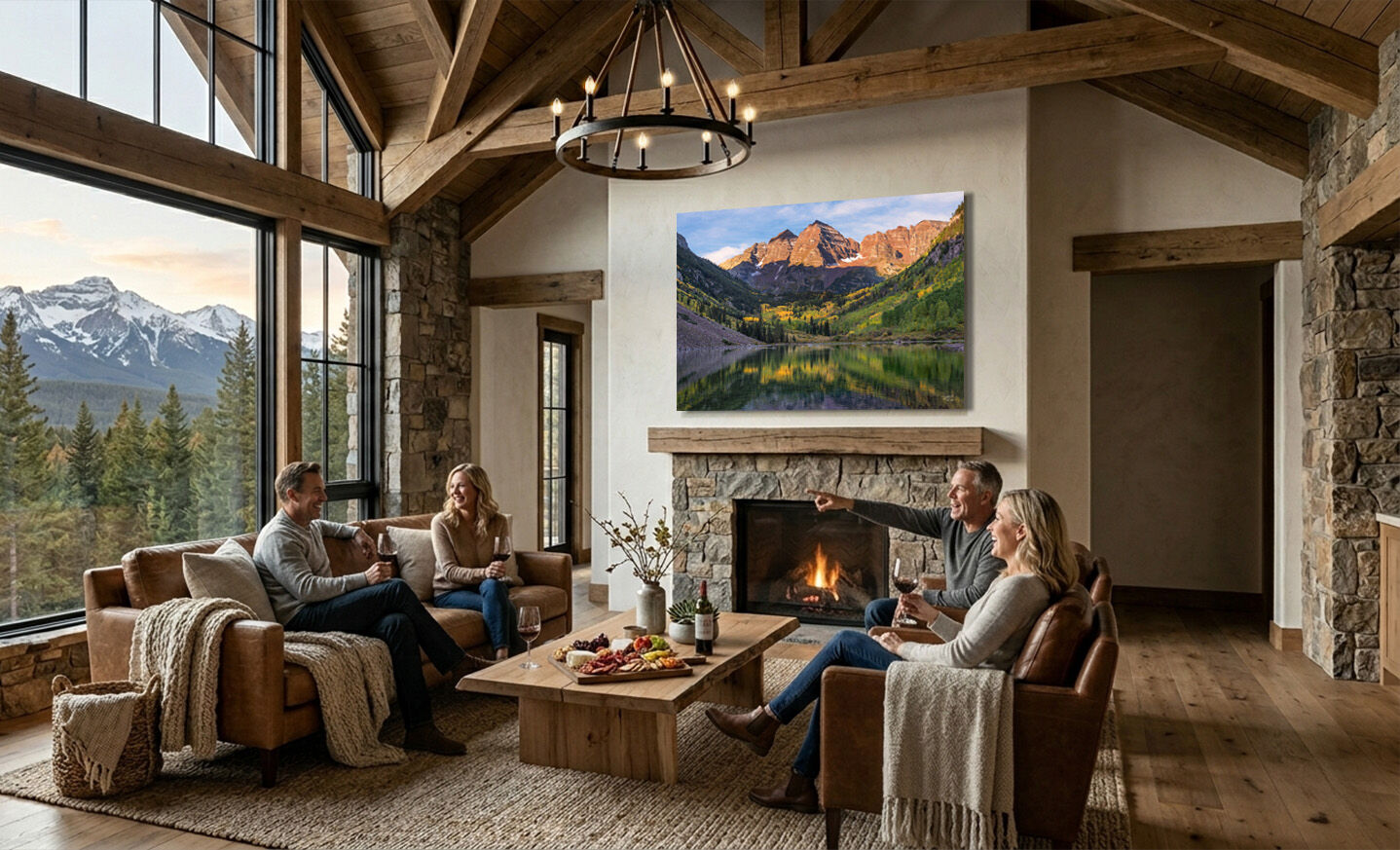
In many homes, large artwork eventually becomes one of the visual anchors of the space — not because it constantly demands attention, but because the room begins to feel incomplete without it.
Light changes across the surface throughout the day. Shadows shift. Different details emerge depending on season, weather, or time of evening. The relationship with the work becomes gradual rather than immediate, which is part of what gives large-scale photography its lasting presence within a home.
The Relationship Between Space and Image
Large artwork does not exist in isolation once it is placed within a room. It becomes part of the environment around it, influencing the way the space is experienced over time.
Some pieces introduce openness. Others create intimacy or quiet. Certain images pull attention immediately, while others slowly become part of the visual character of the home itself.
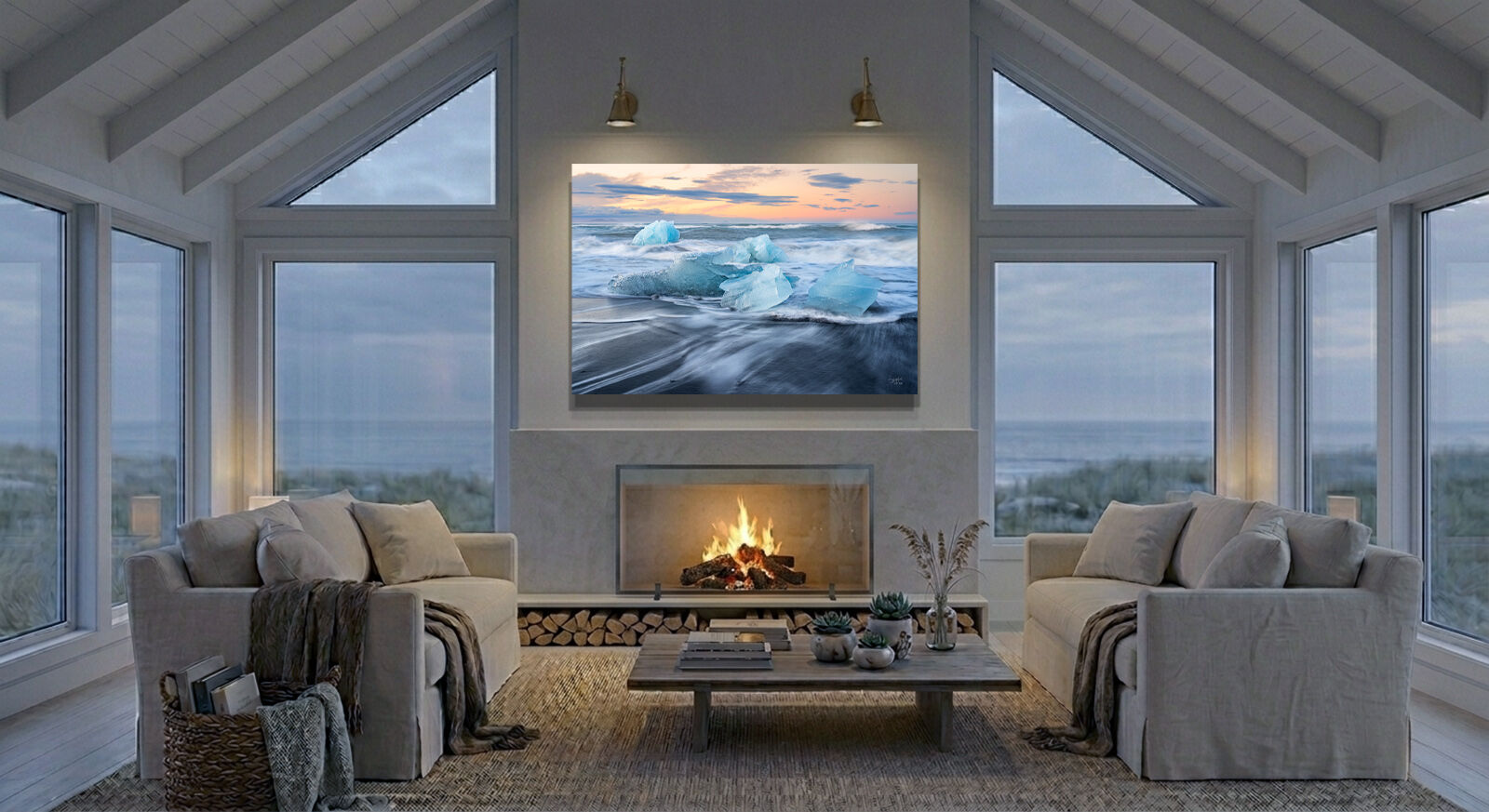
What remains consistent is the way scale changes perception. Whether the subject is forest, water, volcanic terrain, open prairie, or something more abstract, the size of the work changes how deeply it interacts with the surrounding space.
Choosing the right artwork for your home involves more than finding an image you love. My guide on How To Buy Fine Art Photography explores the process of selecting meaningful artwork, from choosing an image to finding the right size and medium for your space.
At its best, large-scale photography doesn’t compete with a space. It completes it — quietly, through presence rather than explanation.
For a more practical look at sizing, placement, and displaying oversized prints, explore my guide to gallery-quality big wall art.
