
Arenal Volcano Costa Rica Travel Guide (2026)
Arenal Volcano Costa Rica is one of the country’s most iconic natural landmarks and a highlight of the La Fortuna region. Rising dramatically above lush rainforest, the volcano anchors a landscape shaped by powerful geological forces and extraordinary biodiversity.
In this 2026 travel guide, I share first-hand experience based on extensive time exploring the region of Arenal Volcano National Park, including hiking trails over historic lava flows, wildlife encounters, natural hot springs, and the area’s fascinating volcanic history.
Whether you’re visiting for adventure, photography, or relaxation, this guide covers everything you need to plan an unforgettable visit to one of Costa Rica’s most celebrated destinations.

How Arenal Volcano Formed: Geology & Tectonic History
Arenal Volcano has been quiescent since 2010, but it remains one of Costa Rica’s most closely monitored volcanoes. Arenal is a stratovolcano (meaning conical in shape) located in the north central Alajuela Province of Costa Rica.
It dwarfs the bordering landscape at a height of 1,633 meters (5,358 feet) and is considered one of the most active volcanoes in the country. Interestingly, Arenal is also the youngest of Costa Rica's volcanoes, its origins traced back to less than 7,500 years, and was formed by an intriguing geological process called subduction.

Subduction occurs when an oceanic plate collides with a continental plate and slides beneath it. This geological process west of Costa Rica can be traced back two to three million years, when the Cocos oceanic plate began to move northeast underneath the Caribbean plate, which led to the creation of the Central American Volcanic Arc.
The rocks of the subducting Cocos plate contain water transported deep underground where it is superheated under great pressure, causing magma to form from melting rock. The hot, buoyant magma then rises up and ejects through the earth's surface, forming chains of volcanoes.

As a result, to the northeast of the subducting Cocos plate edge lies a continuous arc of volcanos, stretching over 1,100 kilometres (680 miles) long from Panama to Guatemala. Arenal is but one of over 70 volcanoes and hundreds of volcanic formations in this fascinating geological area.
Arenal Volcano Eruptions: History Before and After 1968
Arenal Volcano has a long history of volcanic activity, with its first known eruptions dating back over 7000 years. Throughout the centuries, the volcano has experienced numerous eruptions, but the most significant event in recent history occurred in the summer of 1968.
For several hundred years the entire volcano, including the solitary summit crater (now known as Crater D) was covered in lush rainforest. Locals had named it 'Cerro Arenal' (Arenal Mountain), as most perceived it as a benign feature of the landscape.

The surrounding rural area was populated by small communities who sustained themselves through agriculture and cattle ranching. Very few tourists ever visited the area, and Arenal was virtually unknown to the rest of the world.
All of that changed when locals noticed a strange increase in temperatures of the local hot springs, while noticeable fumarolic activity began to appear on the 'mountain'. After a sequence of local earthquakes overnight, at 7:30am on Monday, July 29th after lying dormant for over 500 years, Arenal suddenly and violently erupted with fury.

Three new craters opened up on the western slope at the time of the eruption. Crater A was the source of the initial explosions on July 29, expelling rocks, ash, gases, and lava. Crater B effuses gas in the image above, while lava began to emerge from Crater C in September and continued intermittently for many years.
At the height of the enormous Vulcanian explosions, giant ballistic rocks, some weighing several tons, were hurtled over a kilometre away (1/2 mile) at up to 800 mph, while pyroclastic flows of gases and lava effused down the western slopes, and Plinian columns of ash extended up to 10 kilometres (6.2 miles) into the stratosphere.

After several days of continuous and fierce activity, over 15 square kilometers (5.8 sq. miles) on Arenal's west flanks were completely entombed under rocks, lava, and ash. In total, 232 square kilometres of land was affected, burying the villages of Tabacón, Pueblo Nuevo, and San Luís while claiming the lives of 87 people. The eruption destroyed property, spoiled crops, and killed an estimated 30,000 head of cattle.
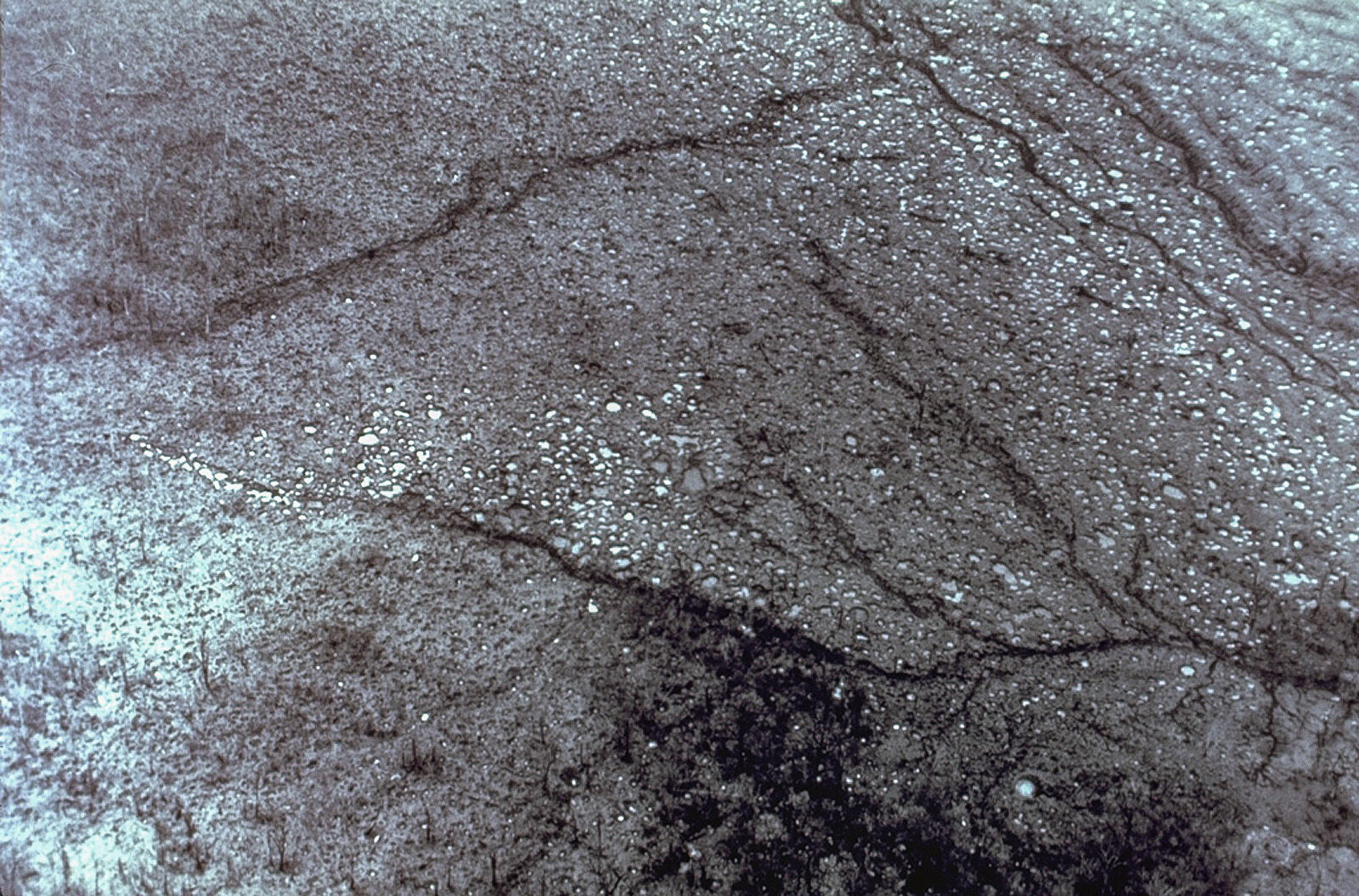
Above, an aerial photograph overlooks a portion of the impact crater field caused by the eruption on July 29, 1968. Close inspection shows rainfall that partially filled most of the craters, formed by the high-velocity impact of rocks expelled from the blast. The massive field stretched approximately 5 kilometers from the vent.
The historical event attracted the attention of scientists from around the world, many who travelled to study Arenal in its erupting state. Adventurers and tourists followed soon after, spawning a new era of tourism for those wishing to witness the spectacle of the volcano in action. The town of La Fortuna, just northeast of Arenal, grew from a sleepy community into a bustling tourist hub that now hosts over 1.5 million people per year.

After the fateful event in the summer of 1968, Arenal remained continuously active for over 42 years with smaller eruptions, explosions, and lava effusion occurring regularly, before once again growing quiet and falling into dormancy in October, 2010. Nevertheless, tourism remains at an all-time high with endless accommodations and activities for all ages in the surrounding area.
With its unpredictable nature and potential for revival at any time, the volcano is now closely monitored with safety measures in place to ensure the well-being of citizens and visitors.
Hiking Arenal Volcano National Park: Best Trails & Viewpoints
Arenal Volcano National Park is a protected area surrounding the volcano, covering approximately 29,692 acres. Established in 1991 by the Costa Rica government, the park offers visitors the opportunity to explore the diverse ecosystems that thrive in the shadow of the volcano. From lush rainforests to volcanic landscapes, the park is a haven for nature enthusiasts.
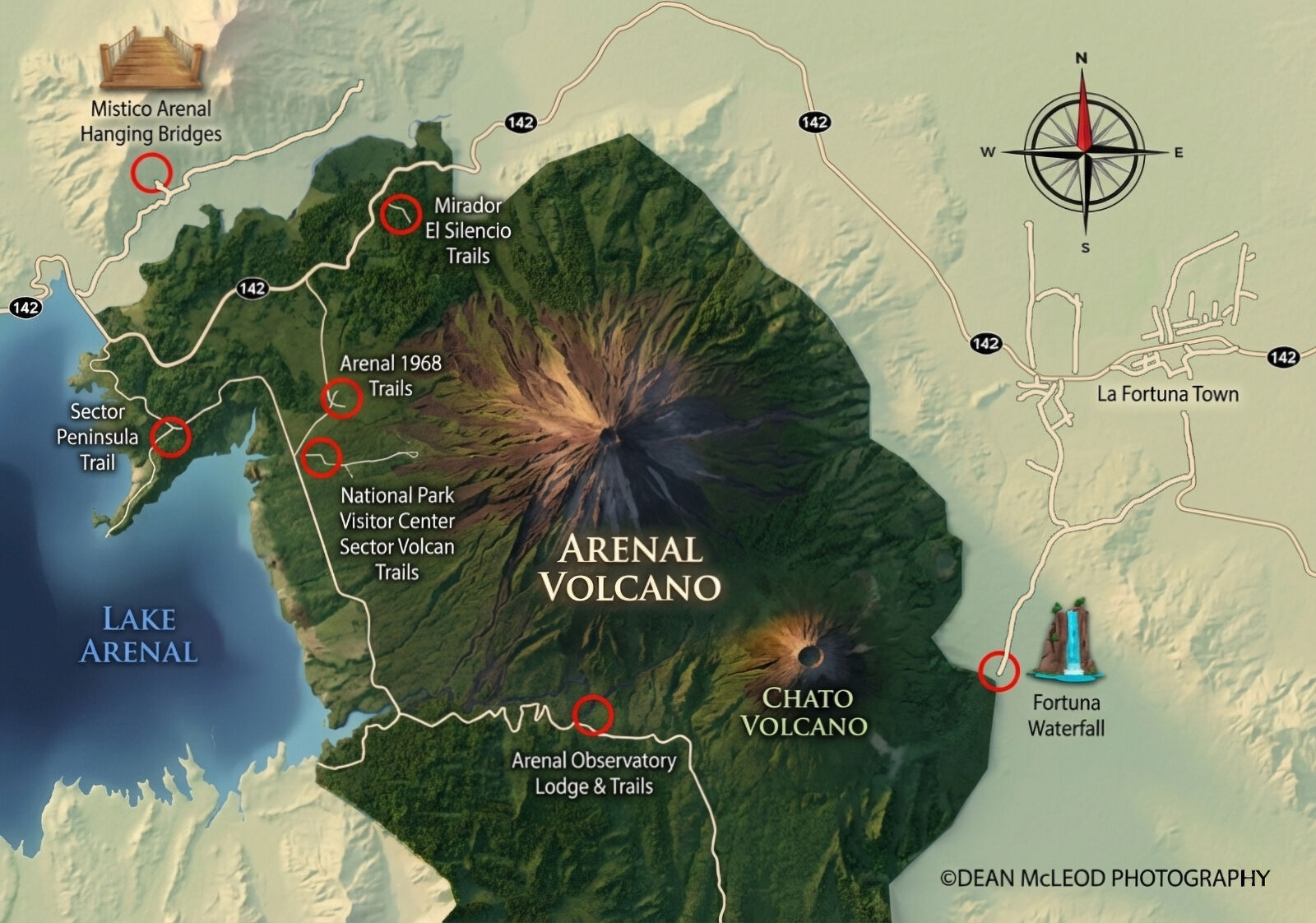
One of the best ways to experience the beauty of Arenal Volcano National Park is by exploring the trails that wind through the area. There are four main spots with hiking opportunities, catering to both beginners and experienced hikers.

We walked the trails at Arenal 1968, which was an enjoyable way to experience the remnants of the original lava flows from the 1968 eruption. Now being reclaimed by forest and vegetation, the trail contains an excellent viewpoint to admire the volcano.
Arenal Observatory Lodge and Trails is the only hotel within the park boundary, offering 11 kilometres (7 miles) of trails, hanging bridges, and spectacular viewpoints including a 28 metre high tower called 'The Nest'. From this exhilarating perch you can view wildlife and incredible panoramic views of the Arenal Volcano, Arenal Lake, Cerro Chato Volcano and the Tilarán Mountain Range.

The Arenal Volcano National Park Visitor Centre features two different trail sections. 'Sector Volcan' contains two main trails; Las Coladas, which has an Arenal viewpoint at the end, and El Ceibo, a rainforest side trail off Las Coladas which features a giant Ceiba tree that is hundreds of years old.
The second 'Sector Peninsula' trail is in a completely different area, closer to Lake Arenal. This trail is easier for visitors who are less mobile, and also features an observation tower for views of the volcano and lake.
Finally, Mirador el Silencio is considered one of the best areas to hike near Arenal, with six trails totaling 14 kilometres (8.5 miles) from easy to moderate, some of the best volcano views, the cheapest entry fee, and the least amount of people.
Regardless of the trails you choose, it is wise to arrive early before it gets too hot and to avoid the crowds. Bring water, snacks, your camera, closed toed shoes, a rain jacket just in case, sunscreen, and insect repellant. Entry fees vary depending on location.
It is also common for the volcano summit to be cloaked in clouds, so consider yourself lucky if you arrive on a clear day for unabated views. Sometimes waiting for a few minutes at the viewpoints will reward you with better views, as the clouds can move rapidly.
Wildlife Near Arenal Volcano: What You Can See
The Arenal Volcano region is known for its rich biodiversity and diverse ecosystems, ranging from rainforests to wetlands which provides habitat for a wide array of wildlife. As you explore the area, you may encounter unique species such as the keel-billed toucan, the red-eyed tree frog, and the white-faced capuchin monkey.
According to park surveys and regional biodiversity records, thirty-five species of fish, 135 species of reptiles, and 131 known species of mammals can be found here. 850 species of birds are also found in the park, making Arenal and the surrounding area a paradise for birdwatching.

We took a guided tour at Bogarin Trail in La Fortuna and saw sloths, poison dart frogs, and incredible bird life. I highly recommend using a guide if you are searching for wildlife, as they are experts finding them in the forest. I would have surely missed many photo opportunities otherwise.
A search of the area will reveal many guided tours where you can experience the incredible biodiversity of Arenal.
Best Hot Springs Near Arenal Volcano
Of the 170 cubic kilometres of rain that Costa Rica receives per year, over one quarter of it ends up in natural underground aquifers. The geothermal activity beneath Arenal Volcano heats the local aquifer, giving rise to a large number of mineral-rich hot springs and streams in the region.
Travelers come from all over the world to experience the famous thermal baths and resorts around Arenal.
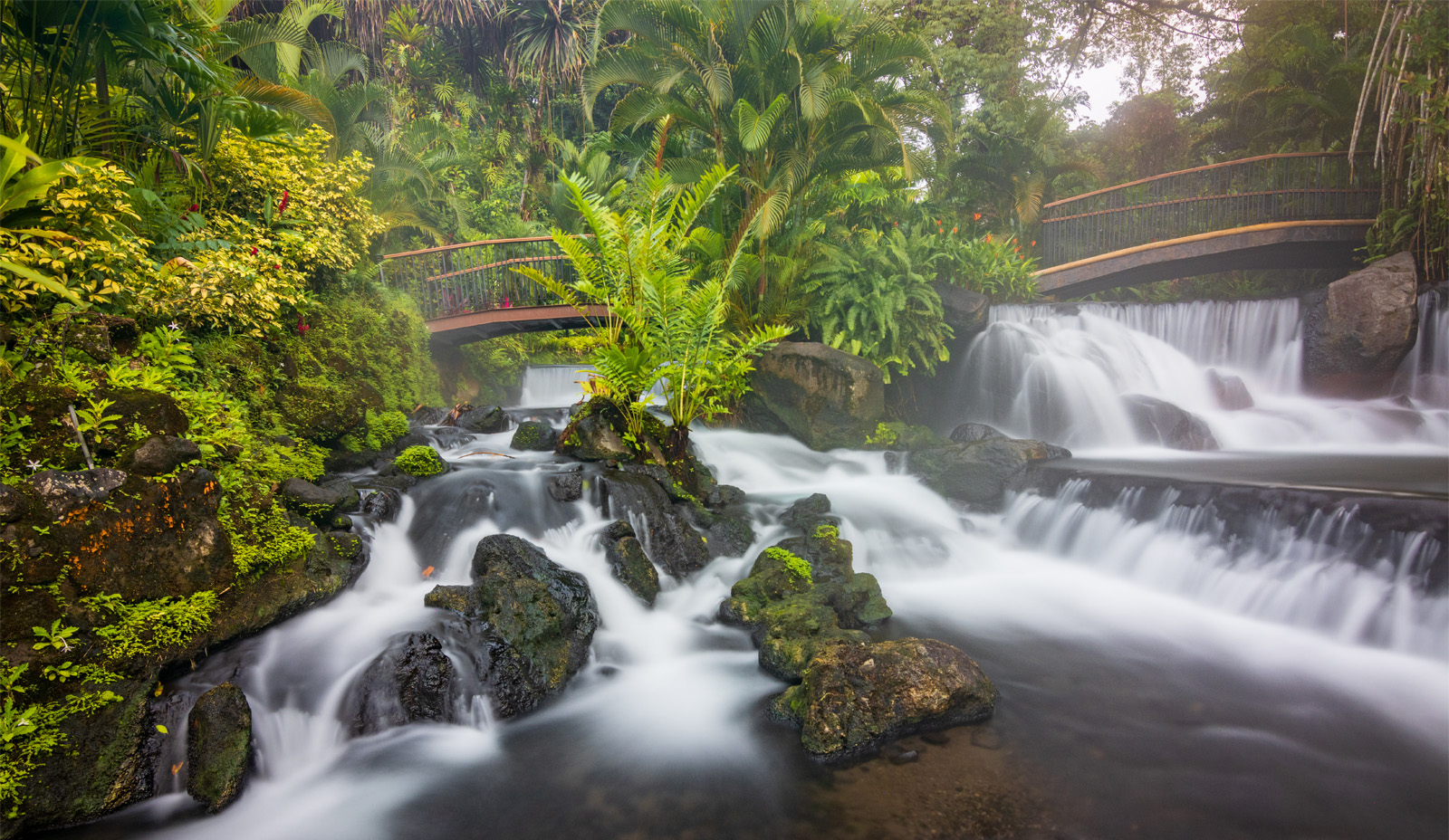
These natural hot springs offer a unique and therapeutic experience, allowing you to unwind while surrounded by the beauty of nature.
Whether you choose to soak in the warm waters or indulge in a spa treatment, the hot springs near Arenal Volcano provide the perfect opportunity to relax and soak up the tranquility of your surroundings.
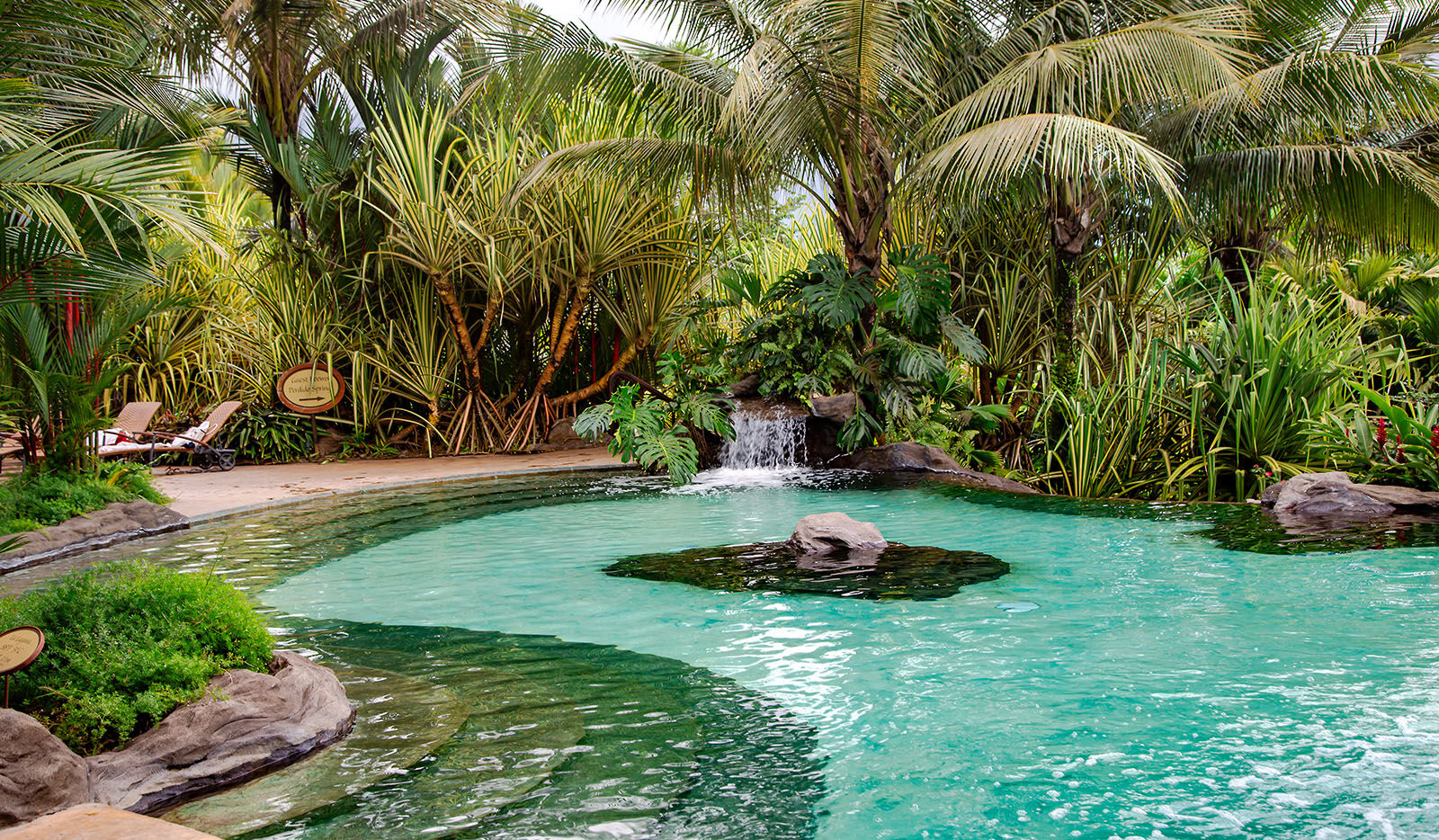
Below is a list of the top hot spring experiences around Arenal, from first-class resorts to budget-minded family options.
It should be noted that Tabacón Resort holds a distinction among the rest of the resorts; it is the only one with a natural river flowing through it that originates above ground. Although there are some man-made pools and structures, much of the river is natural.
Each of the other resorts also have natural thermal water, but it is piped in to manmade pools. Click any of the resorts below to study their websites and amenities.
1. Tabacón Thermal Resort and Spa
2. Baldi Hot Springs Hotel, Resort, and Spa
3. EcoTermales Hot Springs and Wellness Temple
5. Paradise Hot Springs Resort
7. Los Lagos at Hot Springs Village
8. Kalambu Hot Springs Water Park
9. Los Laureles Family Camp and Hot Springs
11. Bonus! Rio Chollin free hot spring river near Tabacón
Best Things to Do Near Arenal Volcano & La Fortuna
For the adrenaline junkies, Arenal Volcano offers a wide range of adventure activities that will get your heart racing. From zip-lining through the treetops to white-water rafting in the nearby rivers, there's no shortage of thrills to be had.
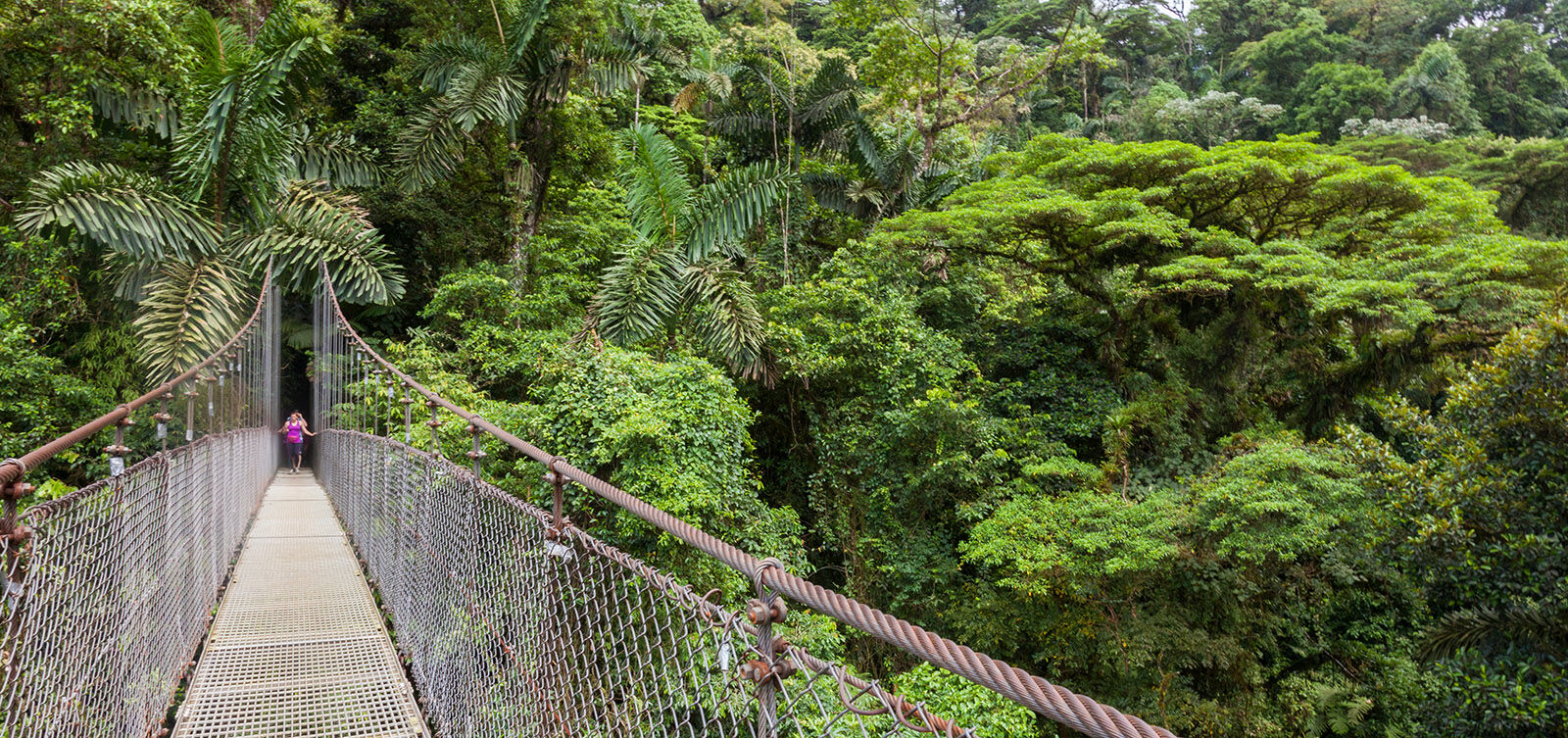
Walking or flying high amidst the rainforest canopy are popular activities with many nearby adventure experiences. These are but a few of the available options.
1. Mistico Arenal Hanging Bridges Park (hanging bridges, horseback riding)
2. Sky Adventures (hanging bridges, zip-lines, aerial tram, canyoning, rappelling)
3. Arenal Mundo Adventura (zip-lines, rappelling, rafting)
4. Pure Trek Canyoning (canyoning, waterfall rappelling, zip-lines, rafting)
5. Ecoglide Arenal Park (zip-lines)
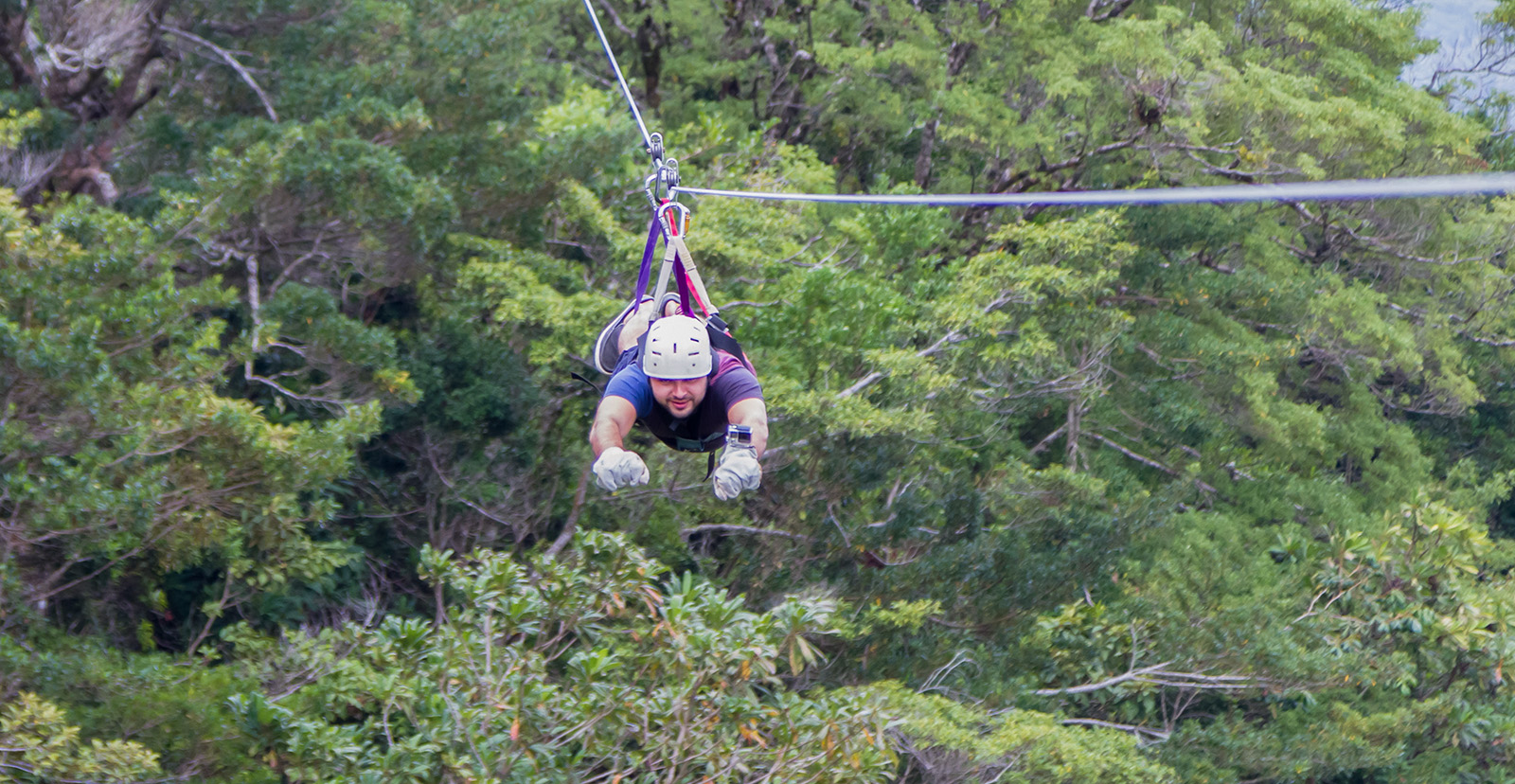
Many of these companies offer a multitude of combo tours which allow you to partake in multiple activities with one ticket, so it's best to research and find the ones that offer your favourite activities.
Another must-see is the La Fortuna Waterfall, where you can witness the powerful 240 foot cascade amidst a lush green landscape and even take a swim in the cool waters. The facility features locker rooms, showers, a souvenir shop, viewpoints, an Orchid Garden, and a restaurant.

The self-guided tour takes you down 530 steps to the base of these incredible falls, which you will hear long before you see them. A reasonable level of fitness is an advantage, as of course, you must reclimb all of the steps to return. I took my swimsuit, water shoes, and camera where I was able to carefully wade into the river among giant boulders to capture the photo (above right).
Planning Your Visit to Arenal Volcano Costa Rica
When planning your visit to Arenal Volcano and the La Fortuna region, it's important to consider accommodation options, transportation, and the activities that you would like to experience. For our one month Costa Rica vacation, we decided on a rough itinerary then booked everything six months in advance to be sure we had a rental vehicle and hotels reserved in different regions as we travelled the country.
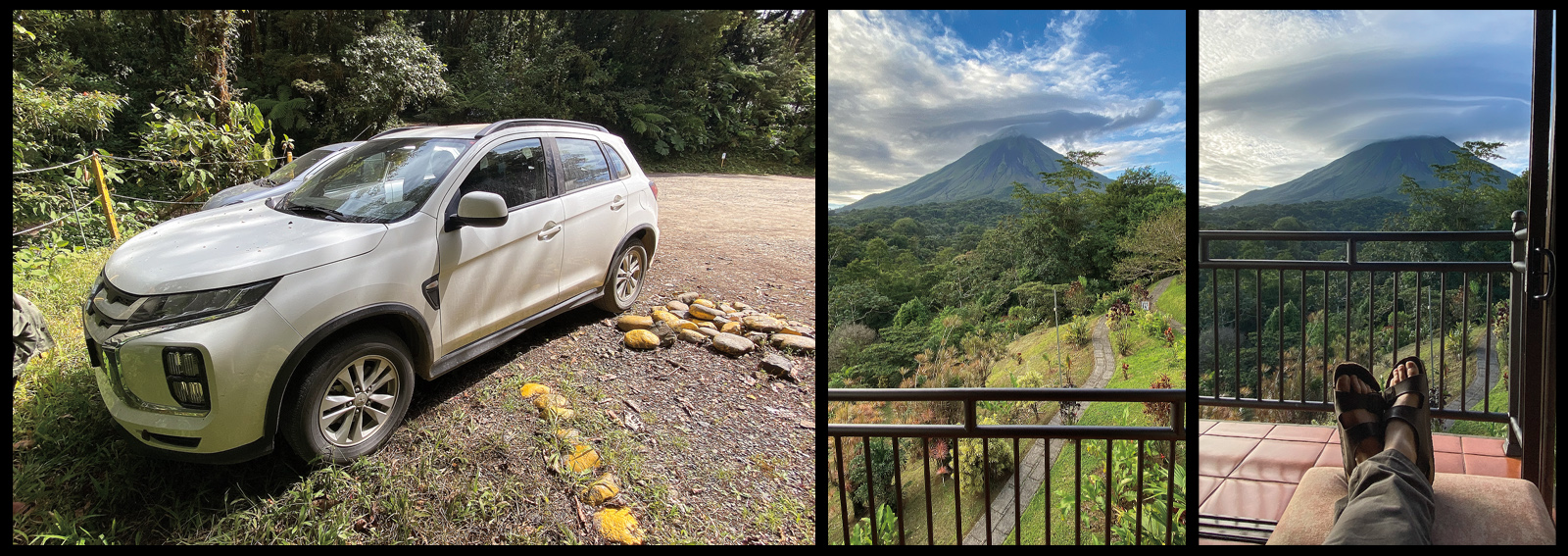
We reserved a hotel room as close to the volcano as possible to take advantage of the sunrise and sunset photo opportunities. We stayed at Hotel Arenal Kioro Suites and Spa on the north side of the volcano, which provided spectacular views right from our balcony.

The entire area around the volcano stretching from the northwest all the way to the east in the town of La Fortuna offers a wide range of accommodation choices, from lavish five-star luxury resorts, to budget-friendly hostels, and everything in between. While most hotels have their own dining options, La Fortuna is also loaded with great restaurants, coffee houses, watering holes, and nearby activities.
For transportation, renting a car is the most popular option as it allows you to explore at your own pace. We rented a small 4x4 SUV from Jumbo Car in San Jose, which was perfect for travelling the country. It is recommended to book well in advance, especially in high season from November to April.
If you prefer not to drive, there are also a multitude of companies offering bus and shuttle services around the region. If you love photography and you’re planning a longer Costa Rica itinerary, I’ve put together additional guides and resources to help in my Costa Rica Photography Planning Guide.
Why Arenal Volcano Is Worth Visiting
Arenal Volcano remains one of Costa Rica’s most compelling destinations, not only for its dramatic volcanic past but for the rich ecosystems and experiences that surround it today.
From rainforest trails and abundant wildlife to geothermal hot springs and panoramic viewpoints, the region offers a rare balance of adventure and tranquility.

Although Arenal has been dormant since 2010, its presence continues to shape the land and the communities around it. Carefully monitored and deeply respected, the volcano stands as a powerful reminder of the dynamic forces that define Costa Rica.
For travelers seeking natural beauty, geological history, and a meaningful connection with the landscape, Arenal Volcano Costa Rica stands as one of the country’s most enduring and unforgettable destinations.
FAQ: Arenal Volcano Costa Rica
1. Is Arenal Volcano active or dormant?
Arenal Volcano has been quiescent since October 2010, following more than 40 years of continuous activity after the 1968 eruption. While it is not currently erupting, it remains closely monitored by Costa Rican volcanologists due to its history and potential for future activity.
2. Can you hike to the top of Arenal Volcano?
No, visitors cannot hike to the summit of Arenal Volcano. For safety reasons, access to the upper slopes is restricted. However, several trails around the volcano offer excellent viewpoints, lava field hikes, and opportunities to explore the surrounding rainforest within Arenal Volcano National Park and nearby reserves.
3. What is the best time of year to visit Arenal Volcano?
Arenal Volcano can be visited year-round, but the best conditions are typically during the dry season from December to April, when trails are less muddy and visibility is more reliable. The green season from May to November offers fewer crowds, lush landscapes, and dramatic cloud formations, though the summit is more often obscured.
4. Is Arenal Volcano worth visiting if it’s not erupting?
Yes — even without active eruptions, Arenal Volcano is absolutely worth visiting. The region offers rainforest hikes, abundant wildlife, geothermal hot springs, waterfalls, and panoramic viewpoints. The volcano’s dramatic shape and surrounding ecosystems continue to define the landscape and make it one of Costa Rica’s most rewarding destinations.
5. How much time should you spend at Arenal Volcano?
Most travelers spend two to three days in the Arenal and La Fortuna area, which allows time for hiking, hot springs, wildlife tours, and nearby attractions like La Fortuna Waterfall. Those interested in photography or relaxation may choose to stay longer to take advantage of changing light and weather conditions.
6. Is it safe to visit Arenal Volcano?
Yes, visiting Arenal Volcano is considered very safe. The volcano is closely monitored by Costa Rica’s scientific authorities, and access is carefully managed within designated parks and reserves. Following posted guidelines and staying on marked trails ensures a safe and enjoyable visit.

