
LUX Fine Art Lighting
LUXPRISM Gimbal Spotlight for Fine Art Photography
When you invest in a fine-art photograph, the print itself is only part of the presentation. How that artwork is illuminated can have a remarkable effect on how it looks—and how it is ultimately experienced.
Earlier this year, I was contacted by LUX Fine Art Lighting, a company focused specifically on lighting artwork. They introduced me to the LUXPRISM Gimbal Spotlight, one of their lighting solutions designed for controlled, focused illumination for fine art.
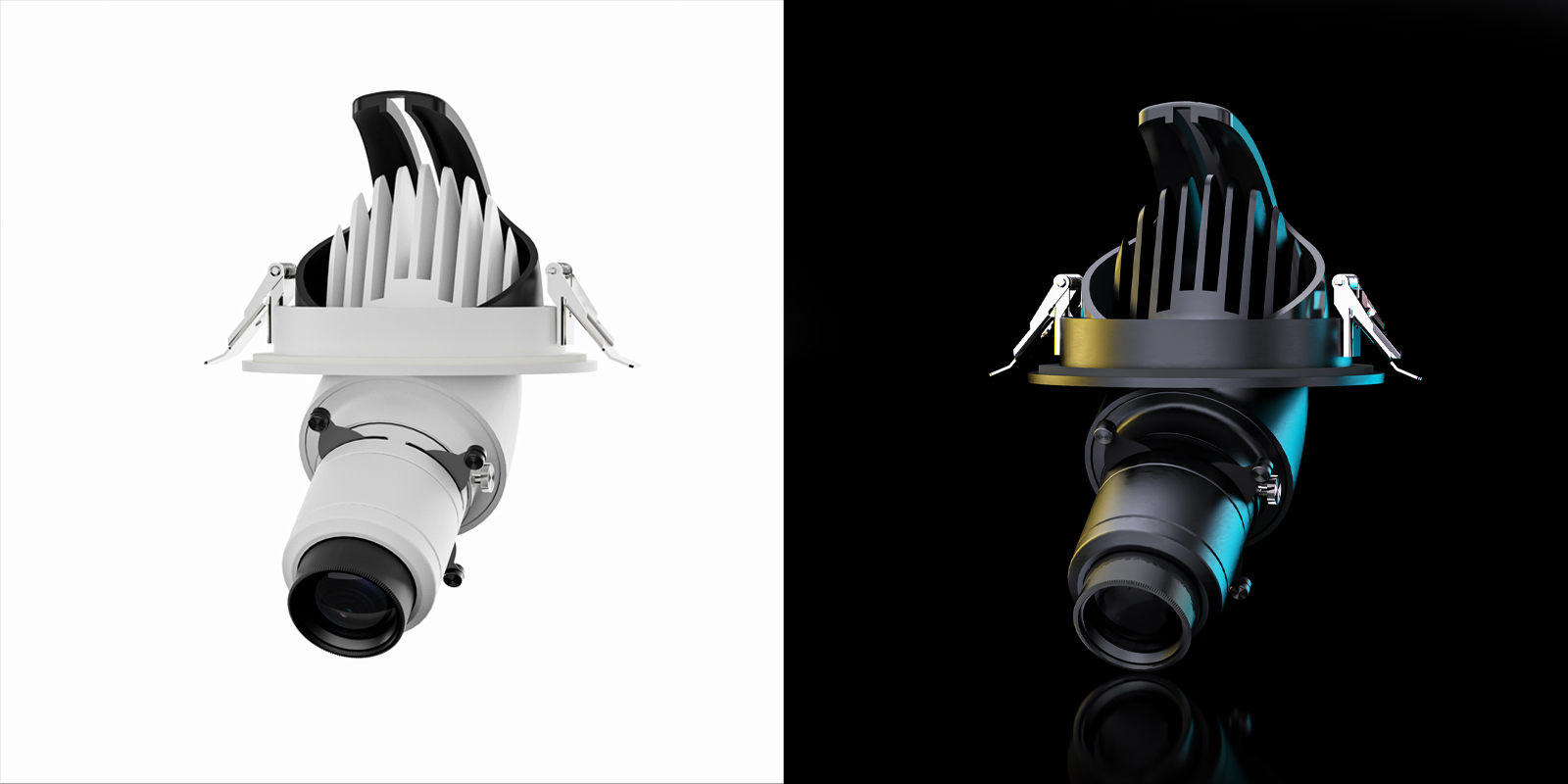
The idea immediately caught my attention. As a photographer, I've spent a great deal of time considering the quality of the prints I produce and how they are presented. I was curious to see how one of my own photographs would look under a light specifically designed for artwork.
LUX Fine Art Lighting sent me a demonstration unit, and I spent several hours photographing and testing the LUXPRISM with some of my own fine-art photographs.
What impressed me most was not simply how much light it produced, but how much control I had over where that light went.
A Light Designed for Artwork
The LUXPRISM is a recessed gimbal-mounted spotlight (also available in a track-mount version) designed specifically for illuminating artwork. Rather than simply pointing a conventional spotlight toward a photograph, the LUXPRISM gives you the ability to control and shape the light to suit the art.
And that became very apparent when I began using it on my photographs.
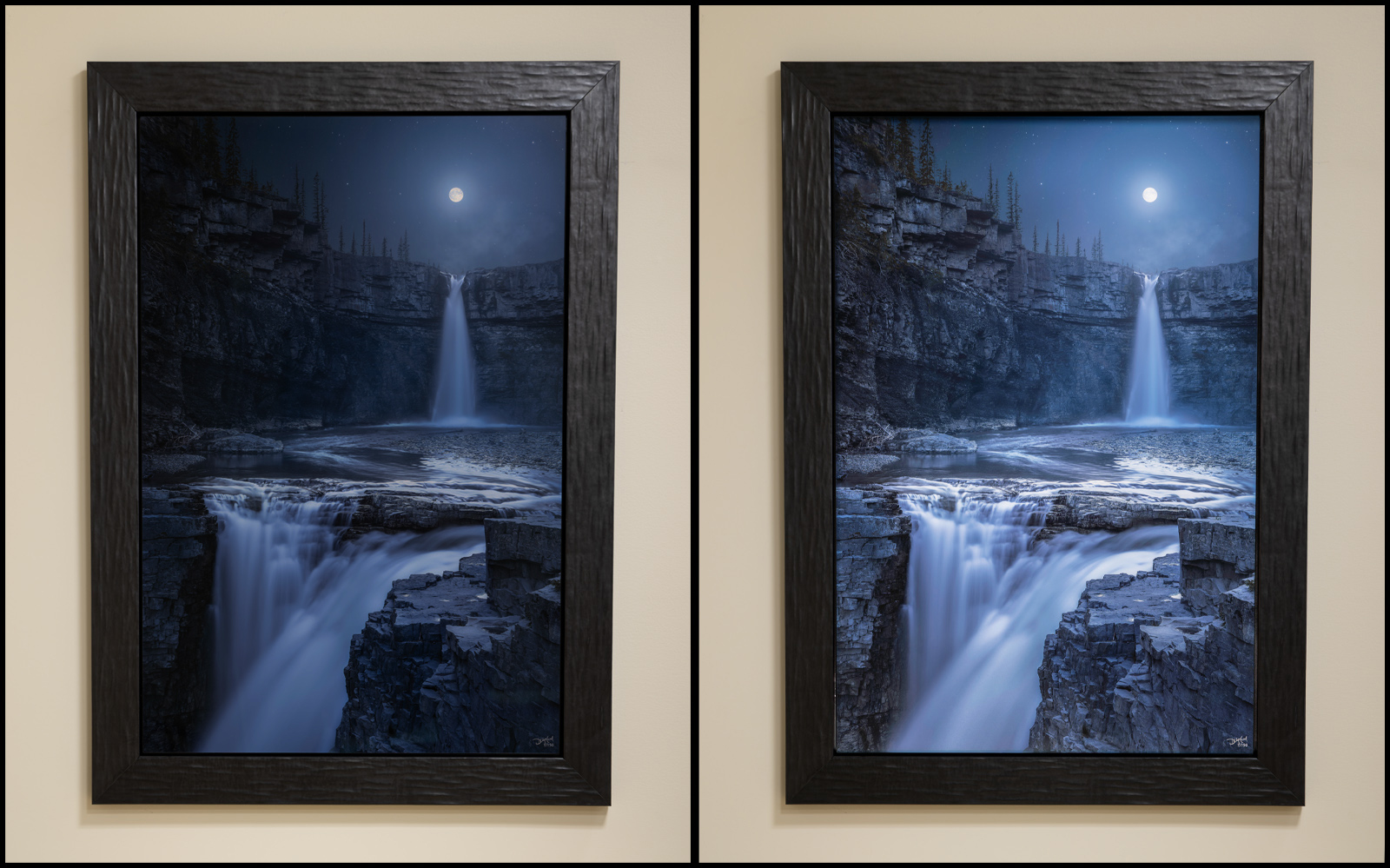
One of the things that contributes to this is the uniformity of the light across the beam. With a conventional LED spotlight, the centre of the beam can be noticeably brighter than the edges, creating a gradual falloff in illumination. The LUXPRISM is designed to maintain consistent brightness across the illuminated area, so the centre of the artwork isn't significantly brighter than the areas toward its edges.
The light is also available in three colour temperatures; 2700K, 3000K, and 3500K, as well as being fully dimmable. These features give you even greater control over the lighting ambiance in the room.
The illumination was impressive. It revealed a tremendous amount of detail throughout my prints, including subtle information in the darker areas of the photographs, while giving the artwork a rich, luminous quality.
The photographs seemed to almost glow. For a photographer, that's a pretty exciting thing to see.
The Feature That Impressed Me Most: Beam Shaping
Of all the features I experienced with the LUXPRISM, the four adjustable light-shaping blades were easily my favourite.
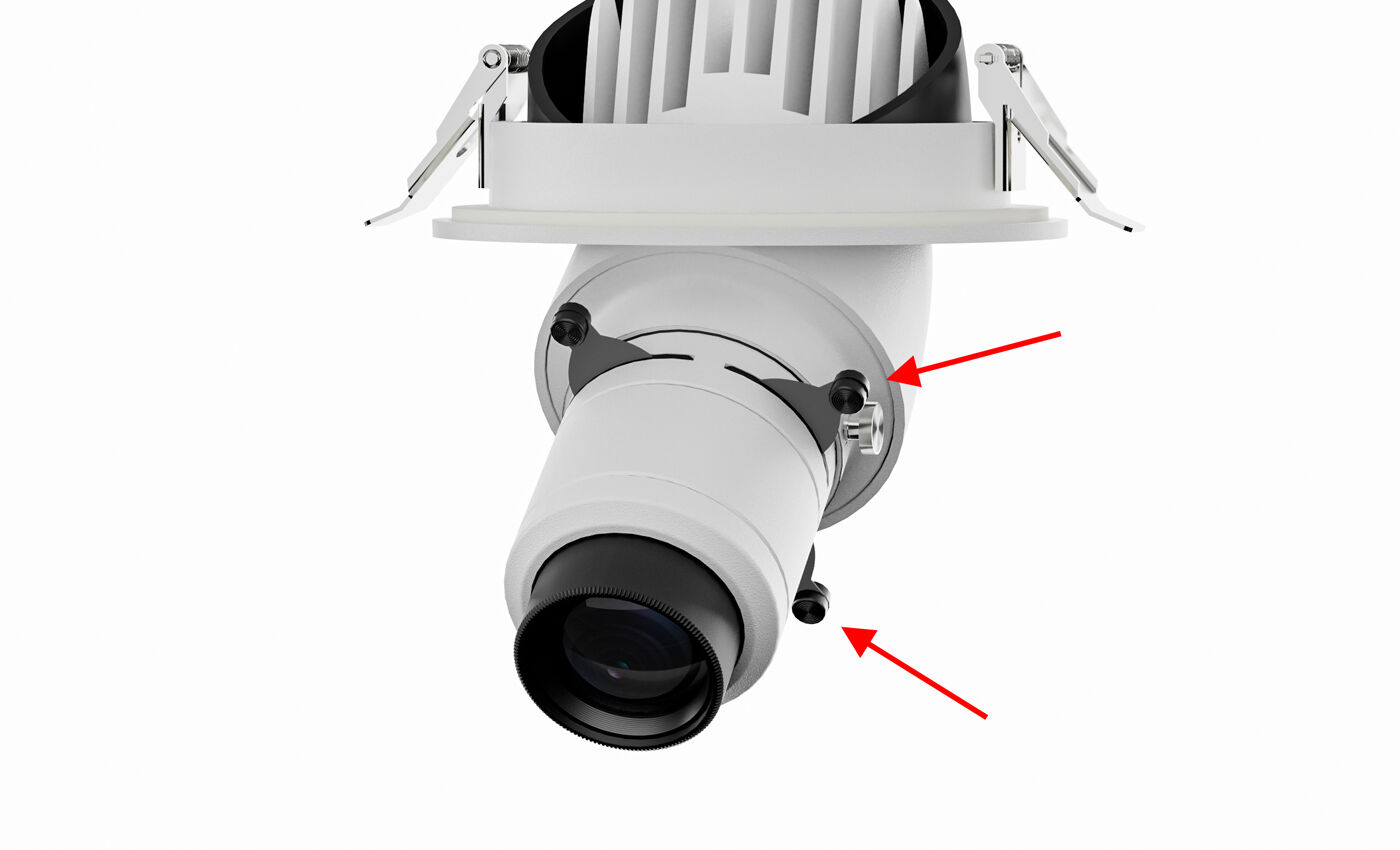
The blades allow you to physically sculpt the shape of the light beam. Rather than simply pointing a round spotlight toward a photograph and allowing light to spread beyond its edges onto the wall, you can adjust the blades so the illuminated area closely follows the dimensions of the art.
That makes an immediate visual difference.
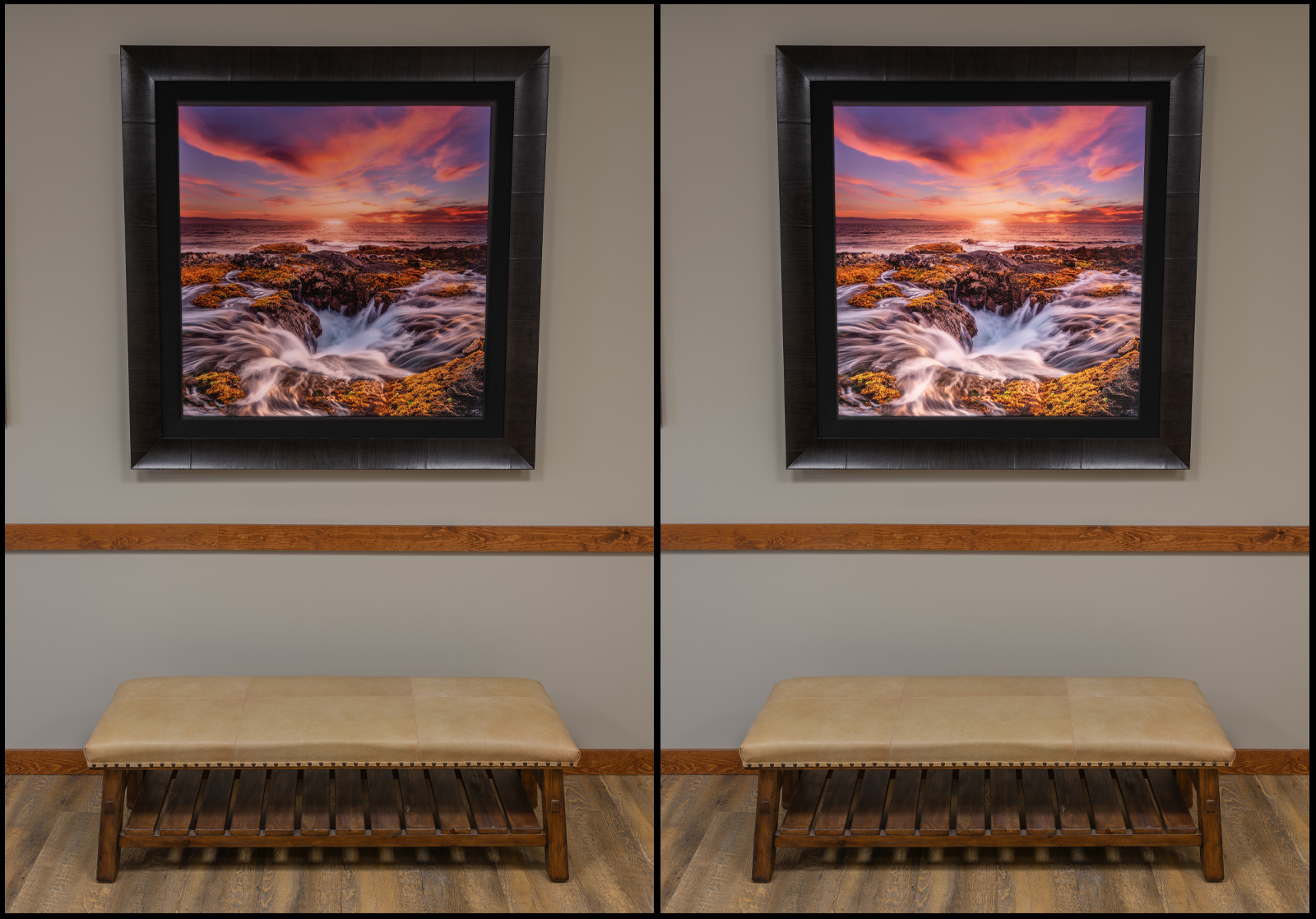
When I illuminated my photographs, I could bring the light right up to the edges of the prints while keeping the surrounding wall essentially unlit. There was very little unwanted spill outside the print surface. A subtle twist of the lens barrel also allowed me to soften or sharpen the edges of the beam for even finer control.
The result was a much more deliberate presentation. Instead of seeing a wall that happens to have a photograph hanging on it, your attention is drawn directly to the photograph, which takes on a luminous quality.
For me, this was the defining feature of the LUXPRISM.
Seeing My Photographs Under the LUXPRISM
Ultimately, specifications and features only tell you so much. What mattered most to me was what I could actually see when the light was illuminating my photographs.
And I was impressed. The LUXPRISM revealed a tremendous amount of shadow detail while preserving the character and richness of the photographs. The spotlight is also rated at an exceptionally high 97 CRI (colour rendering index), indicating that it reproduces colours with a high degree of accuracy and natural tonal variation compared with a reference light source.
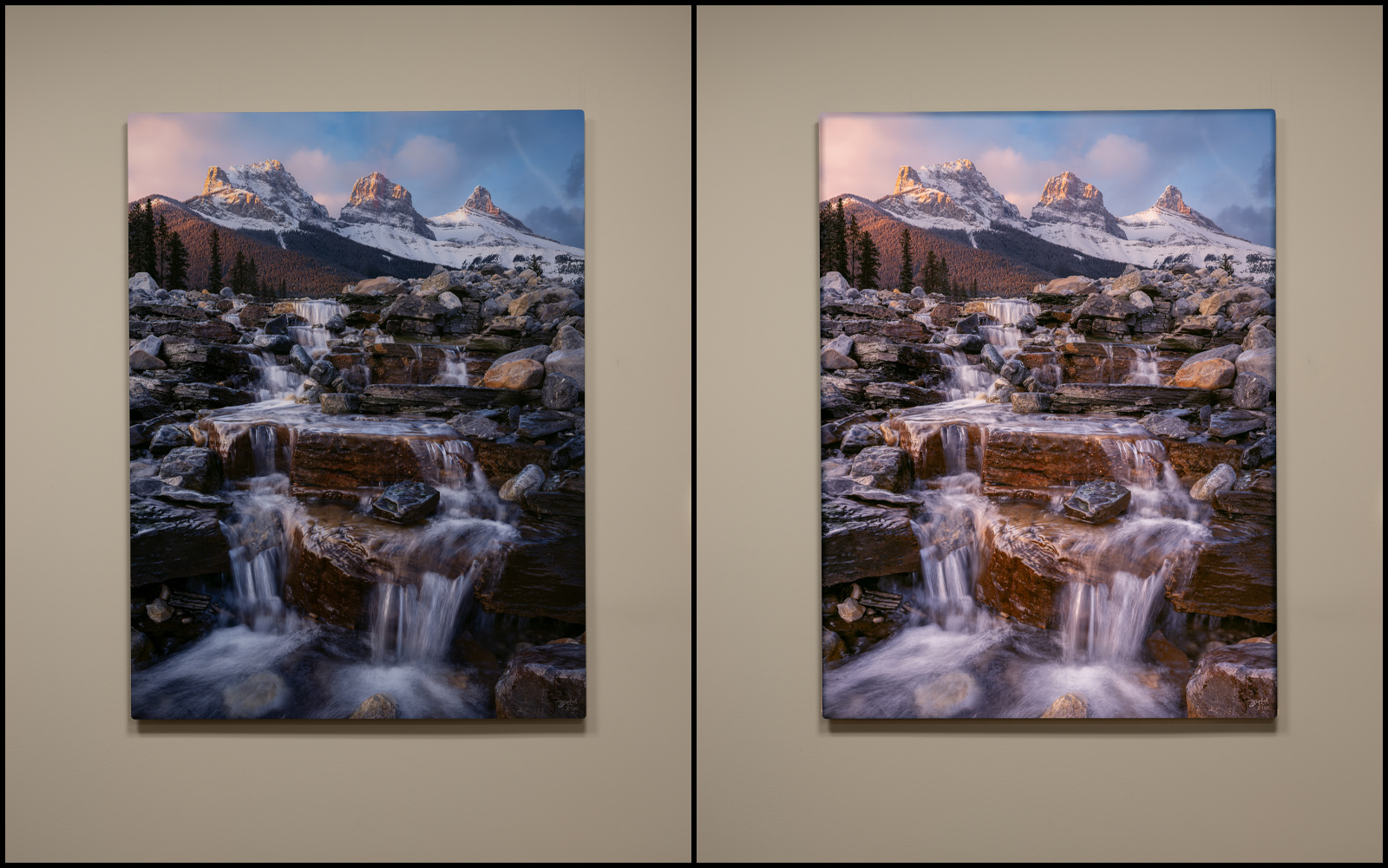
I also noticed how evenly the light was distributed across the photographs. The centre of the print didn't appear noticeably brighter than the outer areas, so the illumination remained remarkably consistent from one edge to the other. The entire photograph felt evenly illuminated rather than drawing attention to a brighter spot in the middle.
The light gave the prints a beautiful sense of depth, making the artwork appear almost as though it were glowing from within. This was particularly striking with photographs containing a wide range of tones, where subtle information in the darker areas became much more apparent under the focused illumination.
The result was not simply that the photographs were brighter. They looked better presented.
And that, ultimately, is what good artwork lighting should accomplish.
Why Lighting Matters
Fine-art photography can contain an extraordinary amount of subtle information—delicate colour relationships, variations in tone, details within shadows, and transitions between light and dark.
Unlike images viewed on a screen, which produce their own light, photographic prints depend entirely on reflected light, so the quality and amount of illumination they receive can have a significant impact on how the artwork is seen.
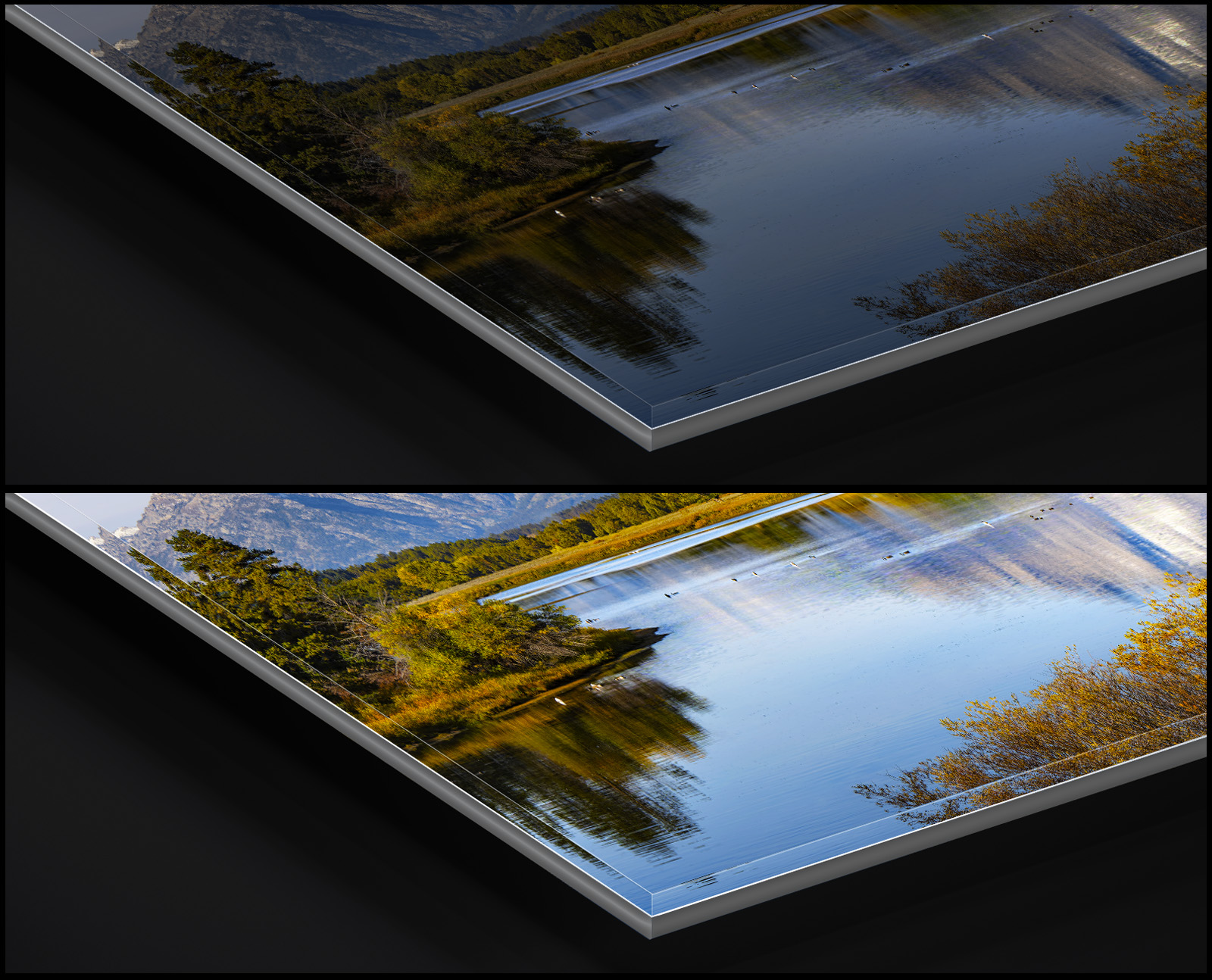
That's why I found the LUXPRISM's approach so interesting. The goal isn't simply to put more light on the artwork. It's to illuminate it evenly from edge to edge while keeping unwanted light off the surrounding wall.
Combined with precise beam shaping, that even illumination helps make the artwork itself the focus rather than a broad pool of light surrounding it.
For collectors who have invested in fine-art photography, I think that's an important consideration. The presentation of the artwork deserves as much thought as the artwork itself.
My Overall Impression
After spending several hours photographing and experimenting with the LUXPRISM on my own work, I came away with an even greater appreciation for what well-controlled lighting can do for a fine-art photograph.
The quality of the illumination was striking, but the feature that impressed me most was undoubtedly the four-blade beam-shaping system.
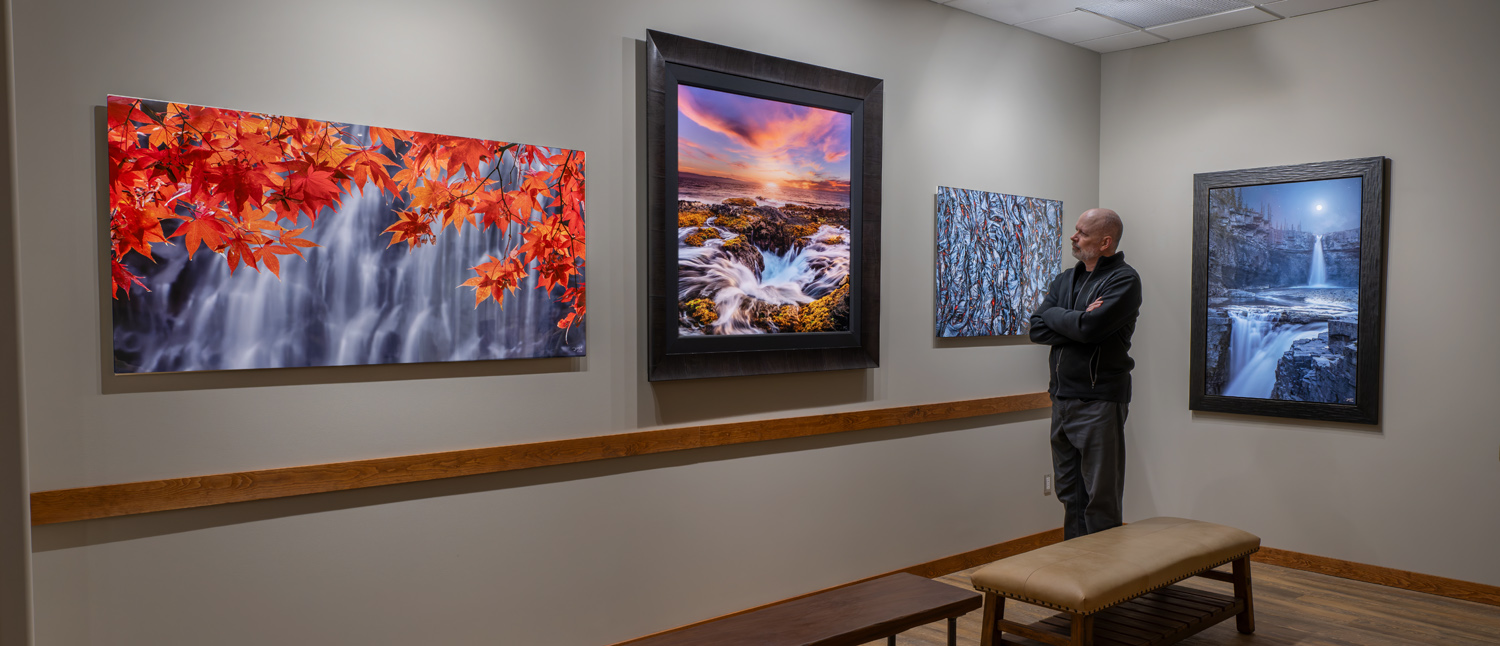
Being able to sculpt the light to the dimensions of the artwork—and then fine-tune the sharpness or softness of the beam with the adjustable lens—provides an unusual degree of control.
As a photographer, I found that especially appealing.
A great photograph deserves to be seen under great light. In my experience with the LUXPRISM, it did exactly what I hoped it would do: enhance the artwork, reveal its character, and allow the photograph itself to remain the centre of attention.
A Special Offer for My Readers
As a special offer for my readers, LUX Fine Art Lighting has provided a 10% discount on any of their products. Simply use promo code DEANPHOTO10 when ordering directly from LUX Fine Art Lighting.
For more information about the LUXPRISM and the complete range of products from LUX Fine Art Lighting, visit their website.
