
Why Mountain Photography Feels So Powerful
There’s a reason mountain photography resonates so deeply with people.
Mountain landscapes carry a sense of scale, quiet, and permanence that few other subjects can replicate. In a home, they do more than fill a wall — they change the atmosphere of a space entirely.
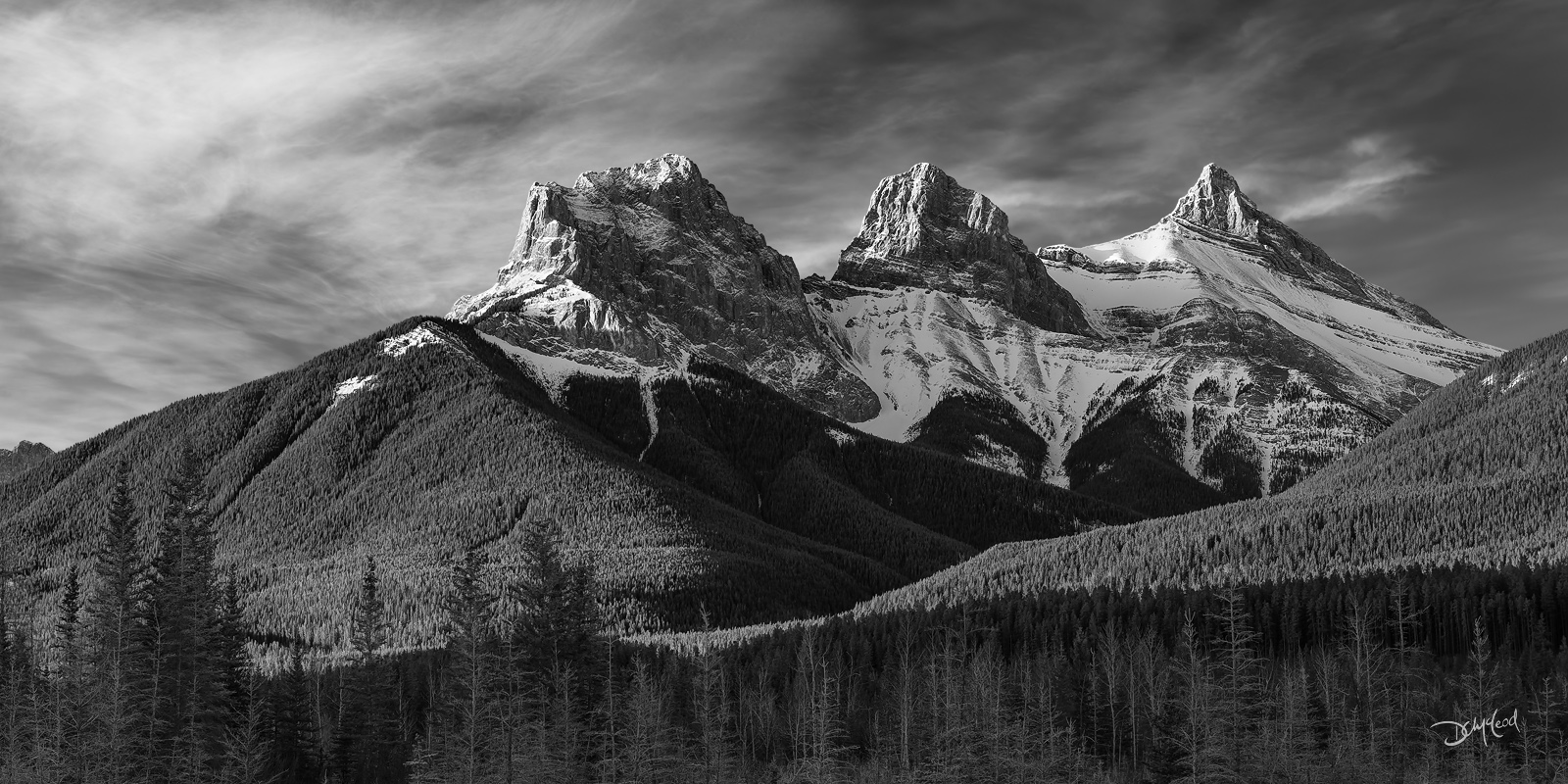
A large mountain photograph can make a room feel calmer, more expansive, and more connected to the natural world. For many people, these landscapes also hold memory: early mornings in the Rockies, road trips through Iceland, alpine air, silence, distance, and the feeling of standing somewhere far bigger than yourself.
That emotional connection is what makes mountain photography such enduring wall art.
The Feeling Mountains Bring Into a Space
In modern life, truly quiet moments have become increasingly rare. Most interiors are filled with screens, notifications, movement, and constant visual noise. Mountain photography introduces the opposite feeling — stillness.
Expansive landscapes naturally create a sense of openness within a room. Snow-covered peaks, low fog drifting through alpine valleys, glacial lakes reflecting soft morning light, and distant horizons invite the eye to slow down and wander. Spaces feel calmer. Less confined. More grounded.
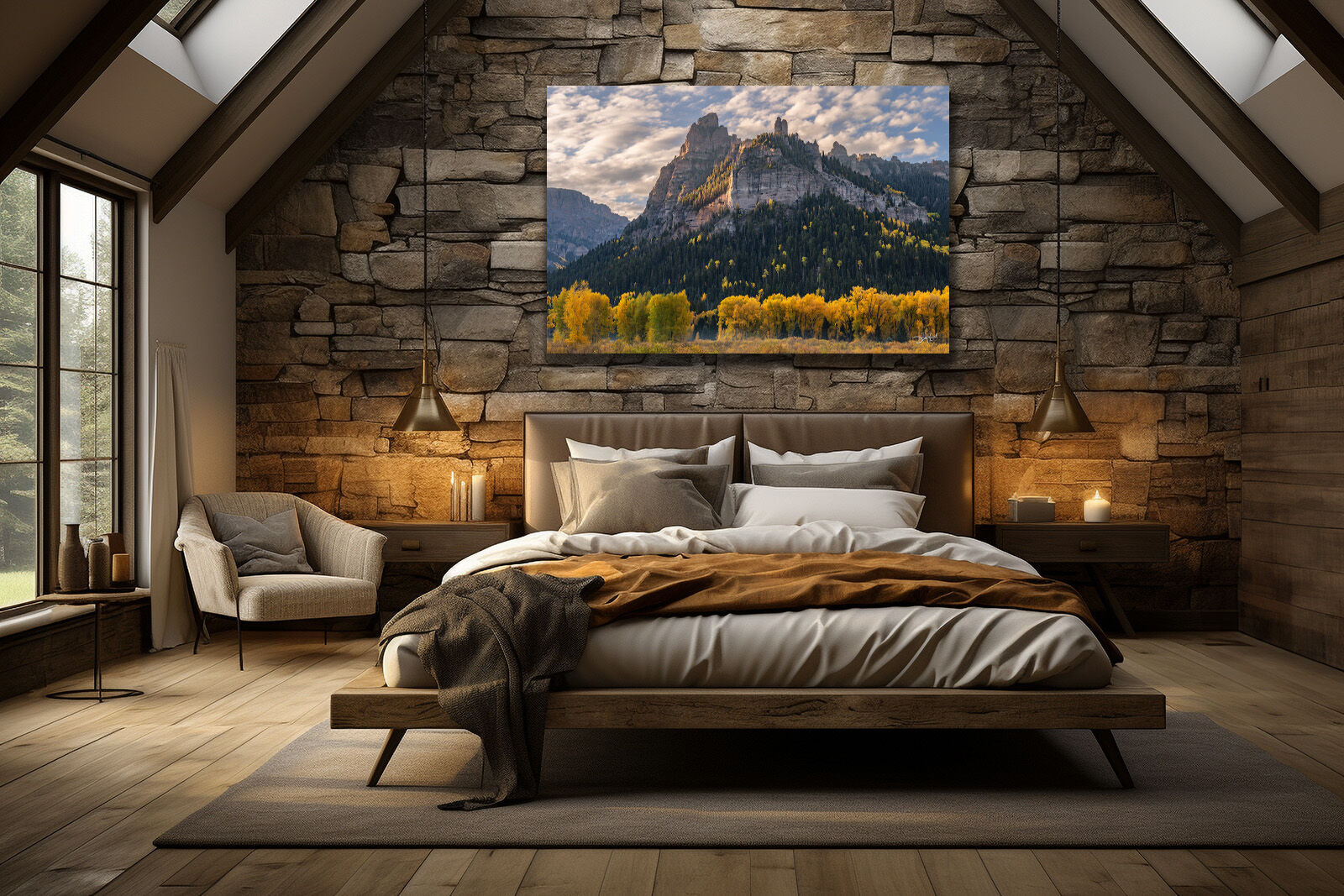
This is one reason mountain photography works especially well in bedrooms, living rooms, and minimalist architectural spaces designed around simplicity and atmosphere. Large landscapes create visual breathing room in a way smaller decorative pieces often cannot.
Standing near a mountain range has a way of rearranging scale. Daily noise fades, while your attention widens. Ordinary concerns feel less immediate.
Even within a home, mountain imagery can recreate part of that emotional response. The photographs become more than objects on a wall. They subtly influence the emotional character of the space around them.
Mountains Often Carry Personal Meaning
For many collectors, mountain photography is about more than the landscape itself — it’s tied to memory, travel, and personal experience.
A photograph of the Canadian Rockies may remind someone of a transformative trip through Alberta. Icelandic landscapes can evoke solitude, adventure, and the feeling remembered after experiencing somewhere untamed for the first time.
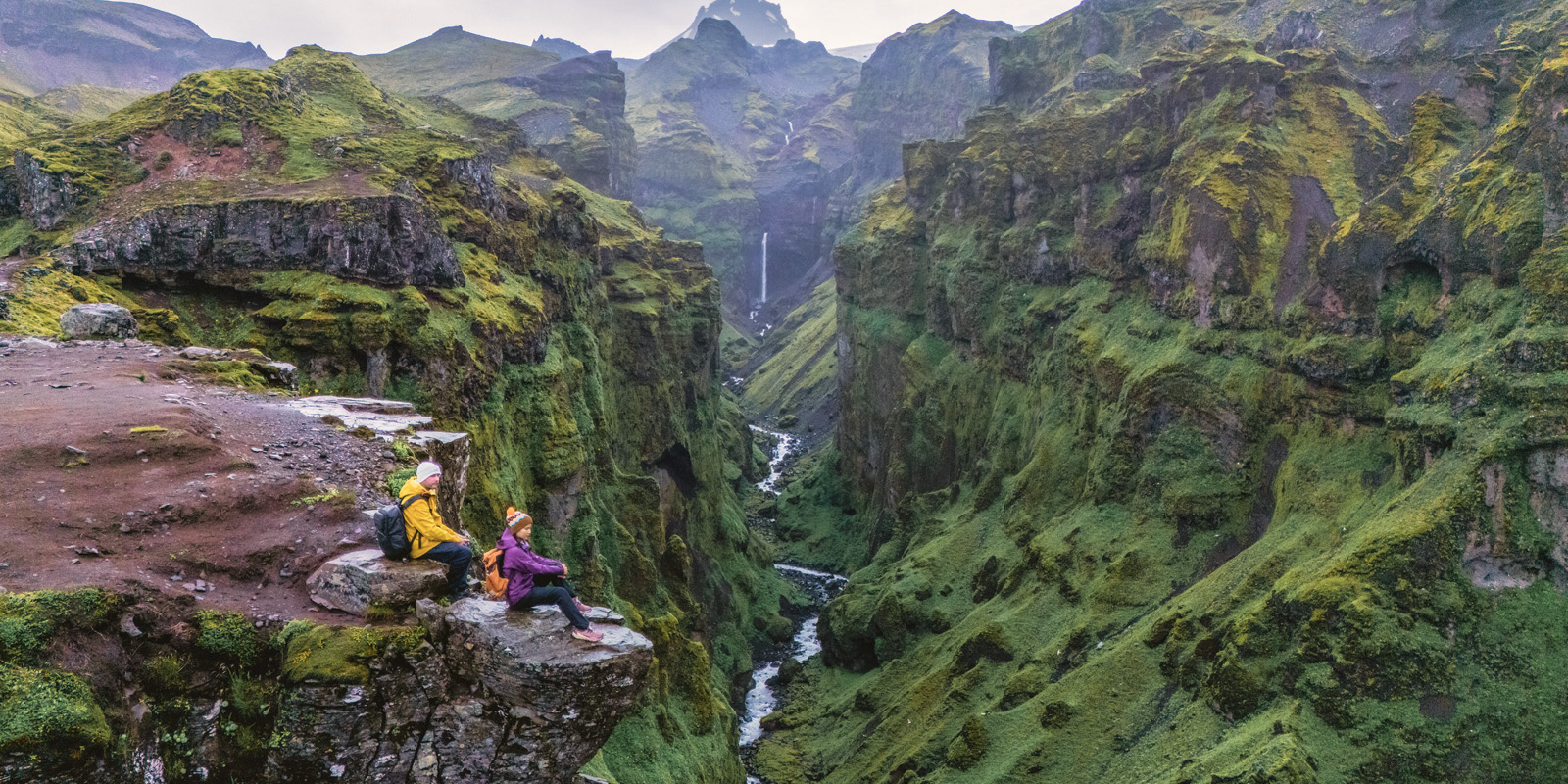
These images become more than décor. They become reminders of places that shifted perspective, slowed time, or left a lasting emotional impression.
Certain landscapes stay with people for years. The sharp air before sunrise. Fresh snowfall absorbing sound. The feeling of standing alone beneath enormous peaks while weather moves across the valley floor.
That emotional connection is often what draws people toward mountain photography in the first place. The artwork reflects not only a landscape, but a feeling they want to hold onto.
Why Mountain Photography Works So Well in Modern Interiors
Mountain photography naturally complements modern interior design because the landscapes themselves already contain balance, atmosphere, and restraint.
Cool earth tones, layered textures, soft light, and clean horizons pair especially well with contemporary spaces that emphasize openness and simplicity.
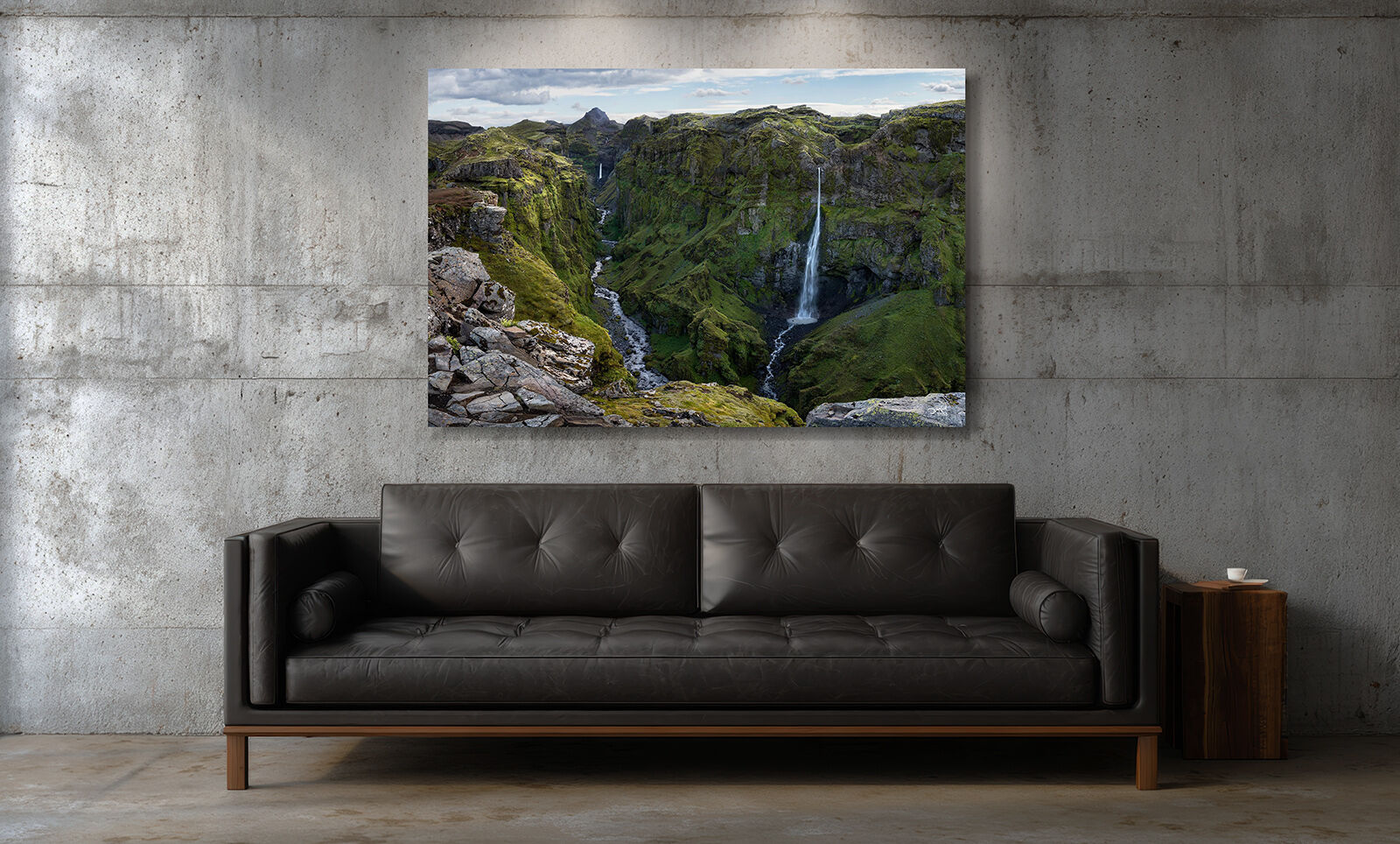
Large mountain prints can also visually expand a room, creating depth and scale in a way smaller decorative pieces often cannot. In open-concept homes especially, oversized landscapes often become the visual anchor of the entire space.
The effect becomes even stronger when the photograph is printed large. Fine details in rock, snow, fog, and shifting weather begin to feel immersive rather than simply decorative. The viewer feels drawn into the landscape itself.
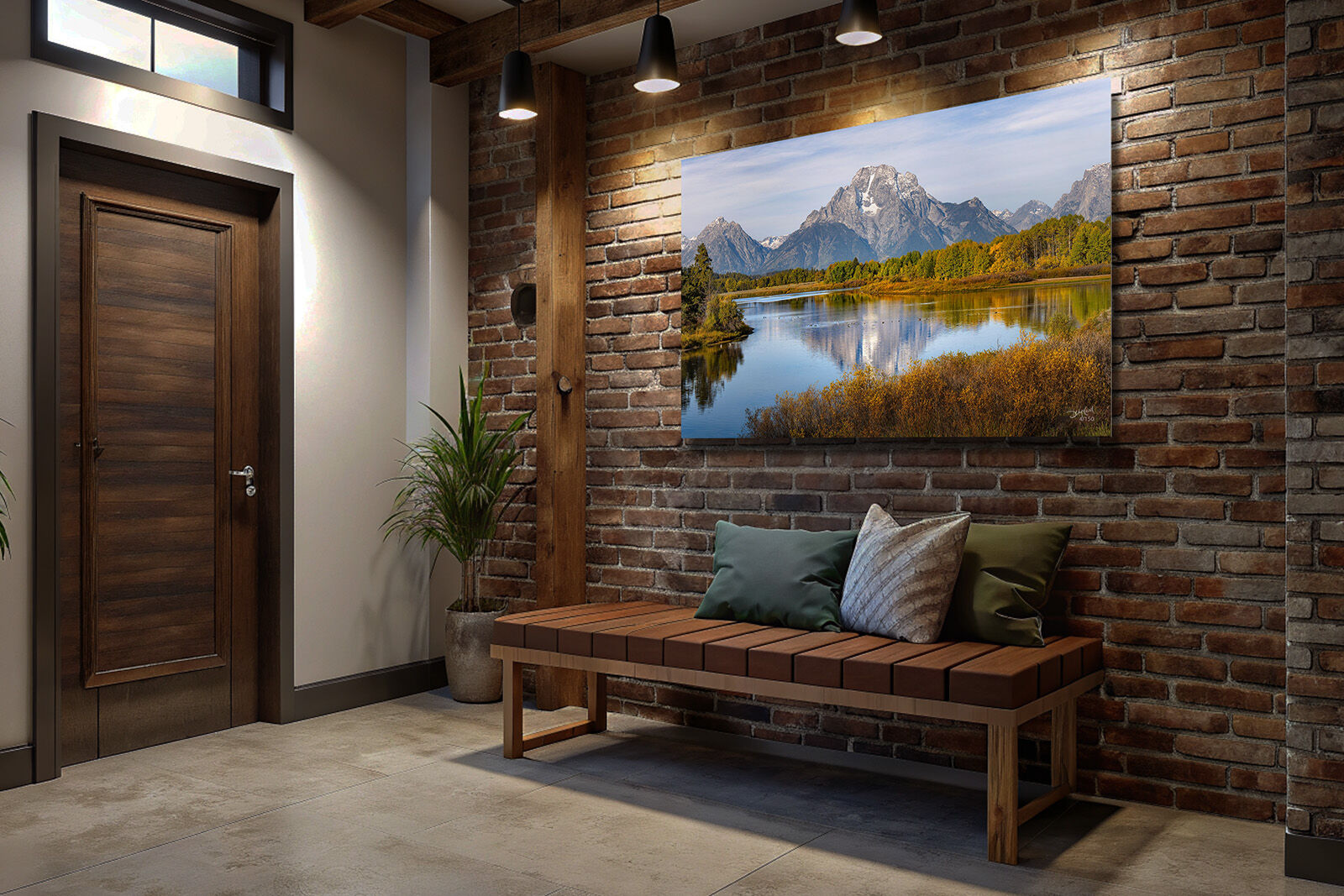
Mountain photography is also remarkably versatile stylistically. Warm autumn forests introduce softness and texture into more neutral spaces. Minimal winter scenes pair naturally with Scandinavian interiors. Dark alpine storms feel dramatic and cinematic in modern homes.
Different Mountain Landscapes Create Different Moods
Mountain photography is never a single emotional experience. The atmosphere changes completely depending on season, weather, light, and composition.
Winter Mountain Photography
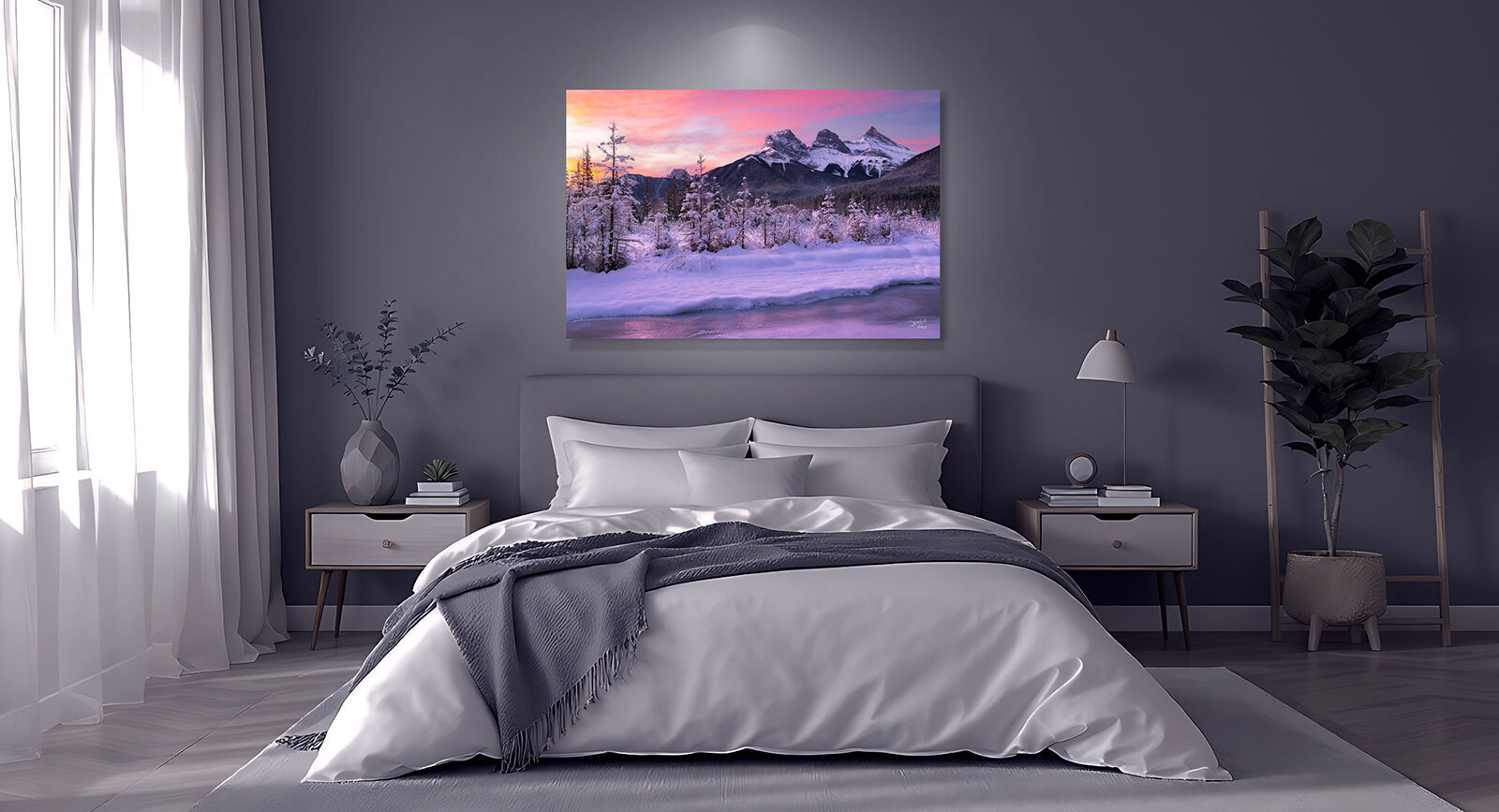
Winter scenes often feel quiet, minimal, and contemplative. Snow simplifies the landscape, reducing visual noise and creating a calm atmosphere that works especially well in modern interiors.
Autumn Mountain Landscapes
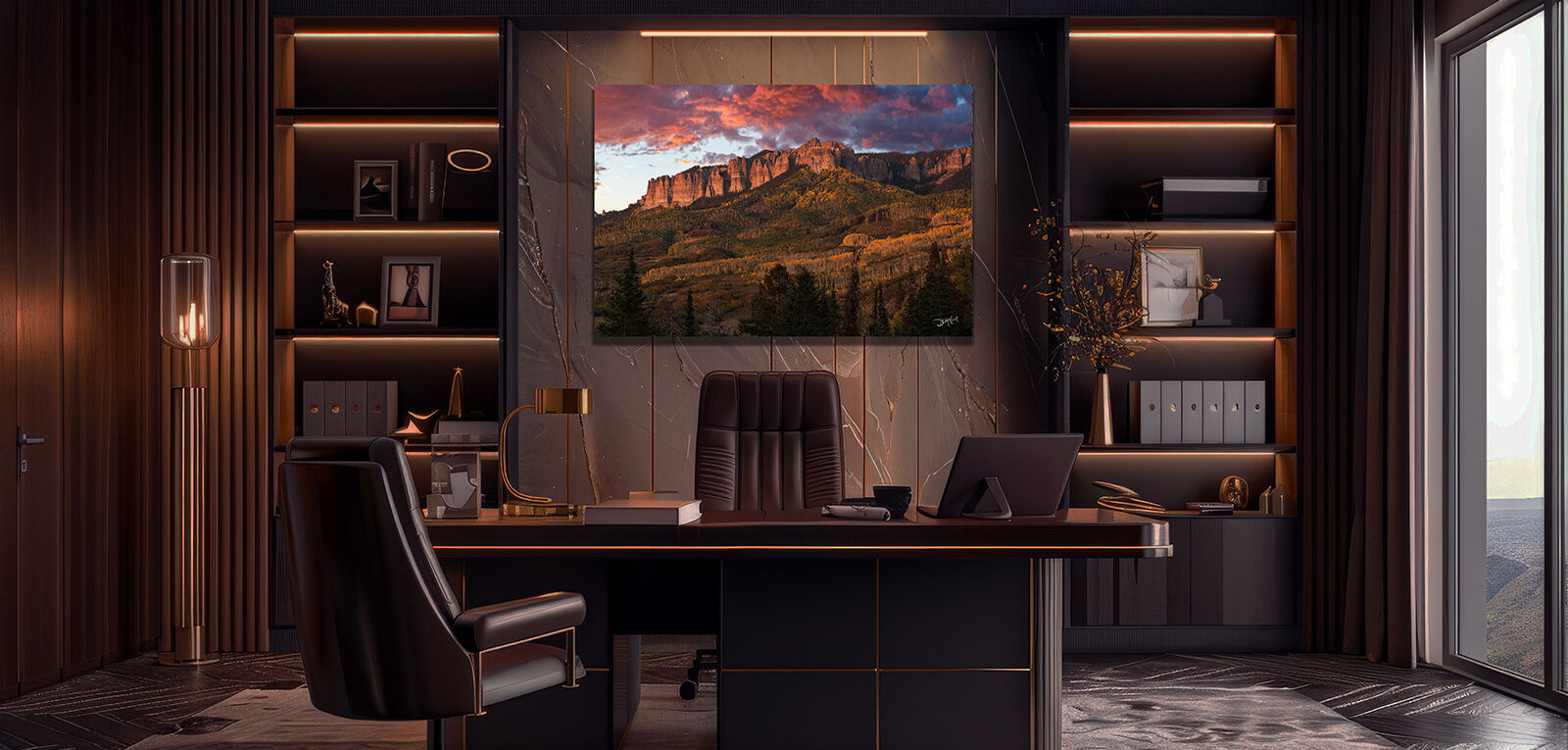
Autumn mountain scenes introduce warmth, texture, and depth. Golden forests and softer light tend to create spaces that feel more grounded and inviting.
Dramatic Alpine Conditions
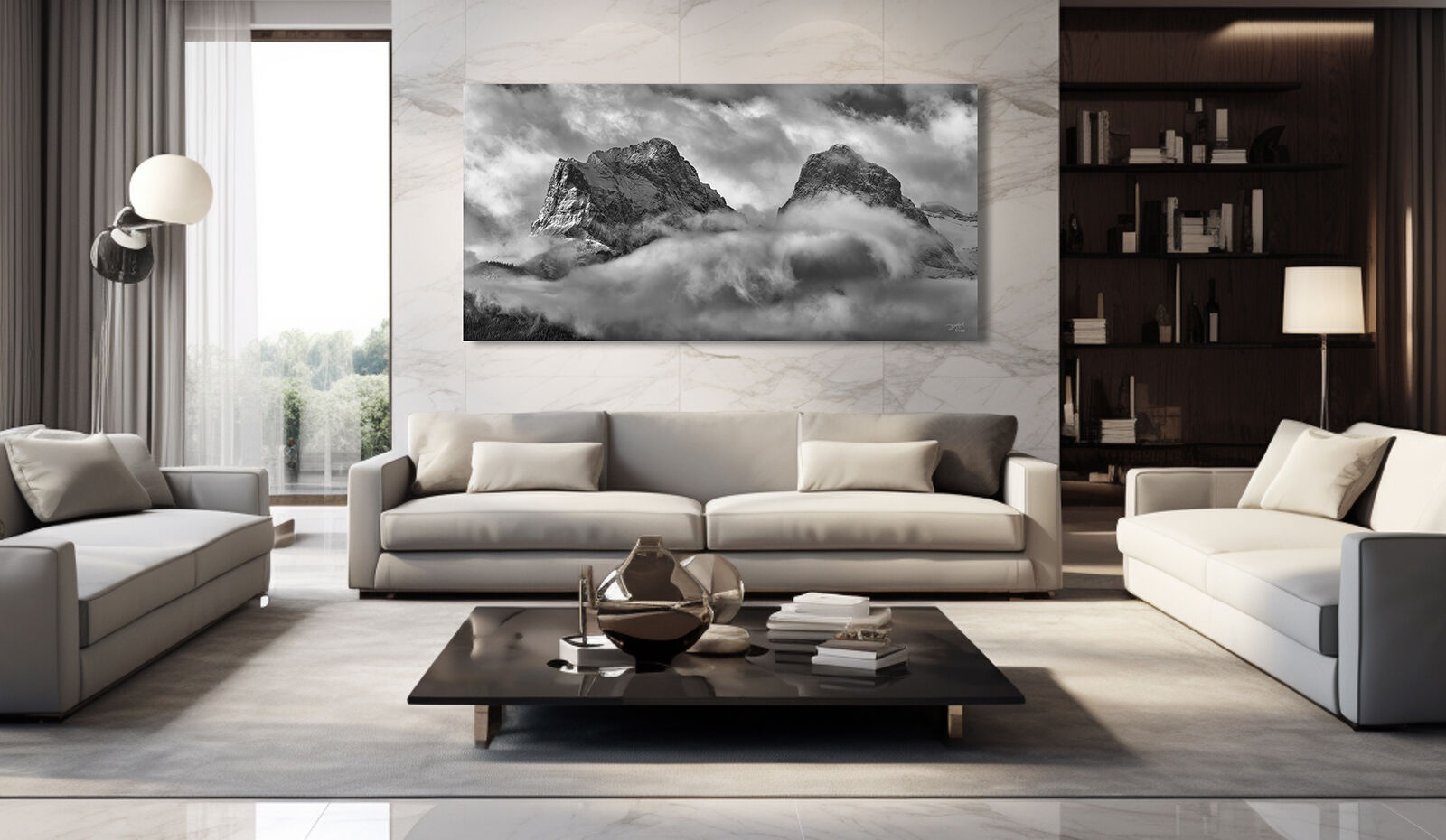
Storm light, heavy cloud, and shifting weather create a cinematic quality that naturally draws attention. These images often become statement pieces within a room.
Minimal Mountain Scenes
Some mountain photographs rely less on drama and more on restraint. Open sky, soft tonal gradients, and isolated peaks work especially well in minimalist and Scandinavian-inspired interiors where simplicity is part of the atmosphere itself.
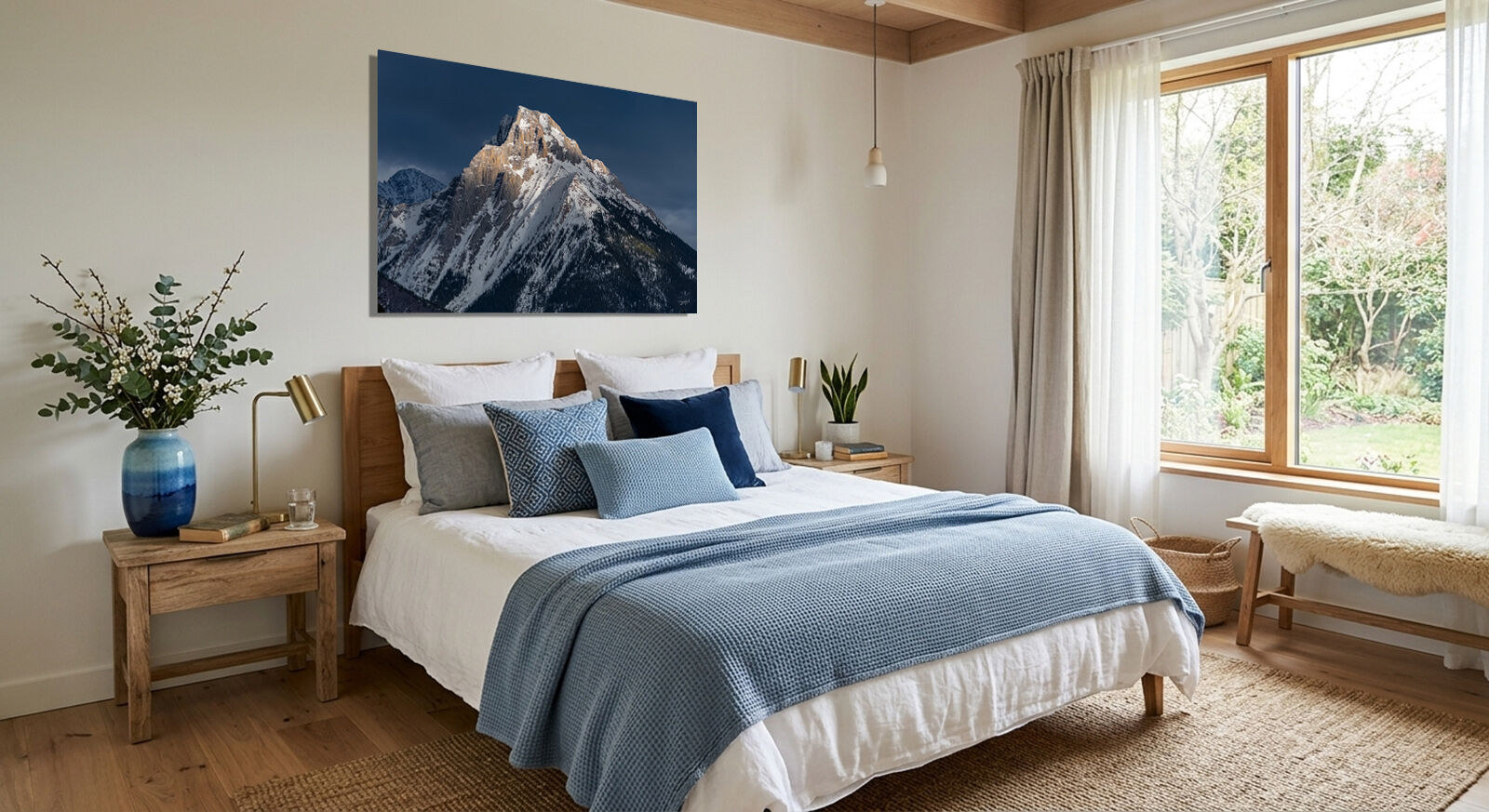
The Physical Presence of the Print
The way a photograph is printed has a direct influence on how it is experienced within a space. Three-dimensional depth, tonal richness, detail, and clarity all contribute to how present the image feels on a wall.
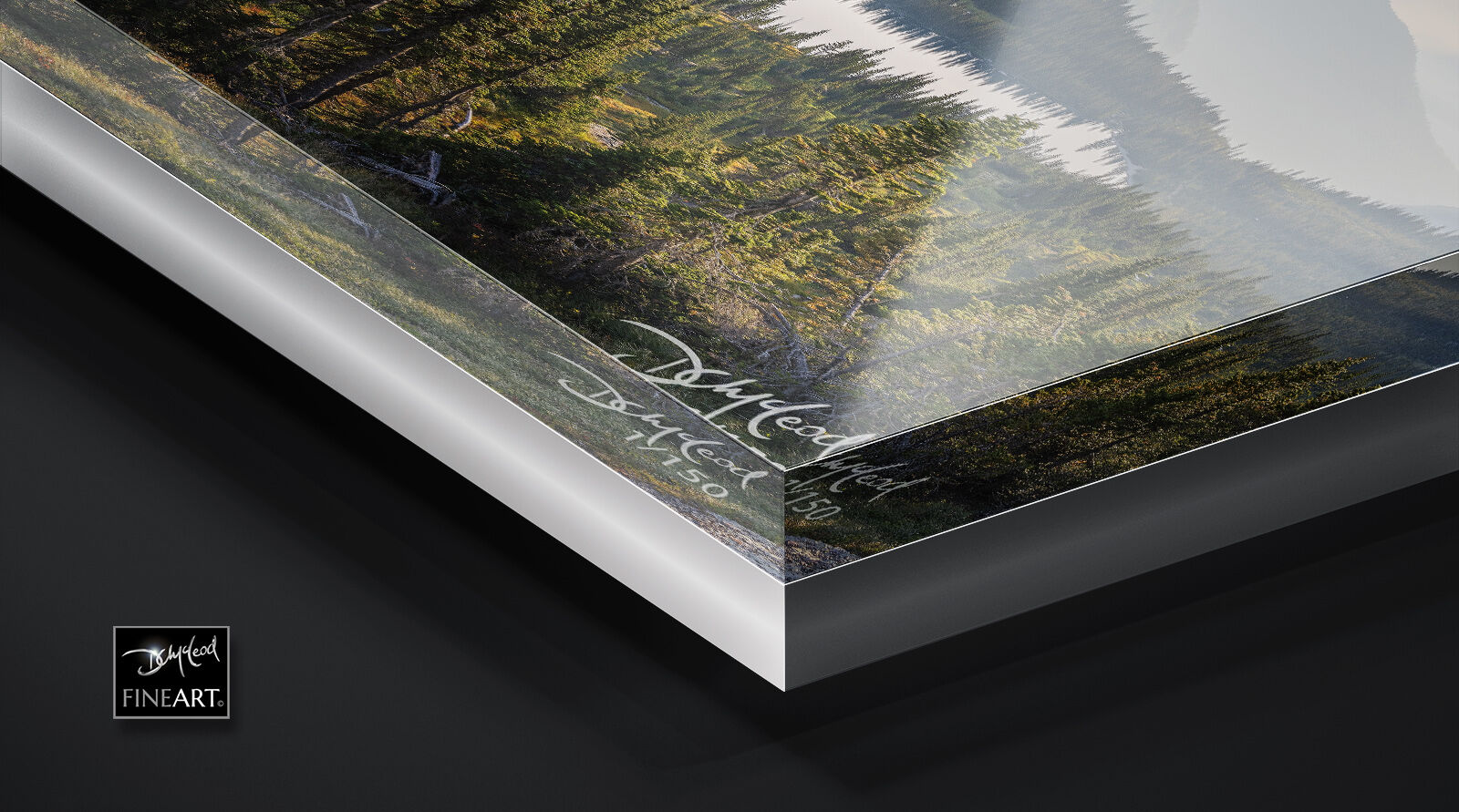
In larger formats especially, premium materials like acrylic allow the photograph to retain its atmosphere without distraction. Subtle texture in clouds, detail in rock formations, and delicate transitions in light remain intact, reinforcing the sense of viewing a landscape rather than simply an object.
Scale also changes the experience entirely. Mountains are environments we experience with our full field of vision, which is one reason they translate so effectively into large-format wall art.
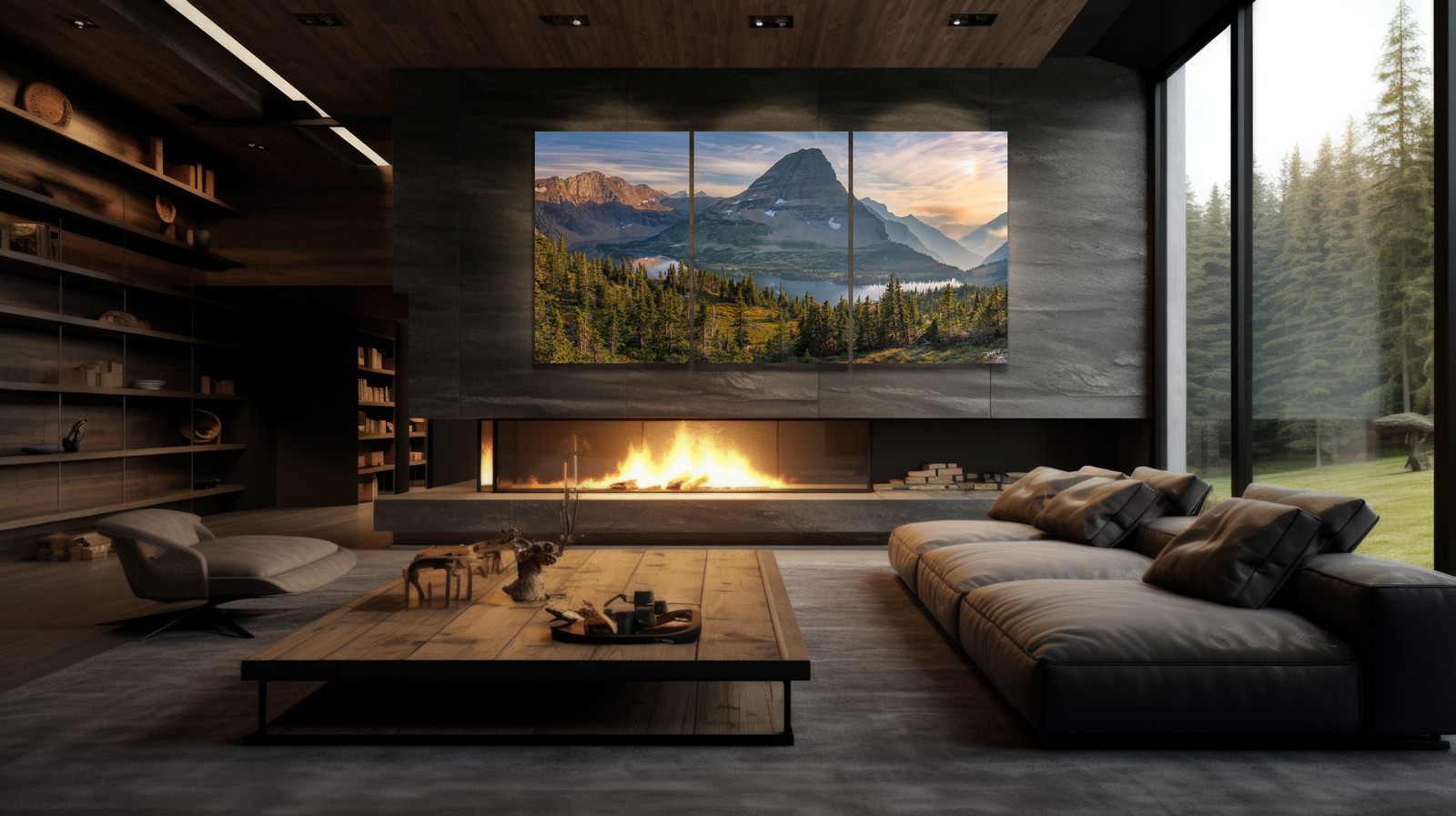
At larger sizes, the landscape begins to feel immersive. The photograph creates presence within the room rather than simply filling empty wall space.
Photography as Experience
Fine art photography offers a different emotional experience than paintings or abstract décor.
Unlike purely decorative artwork, landscape photography carries a sense of place and lived experience. The weather, the atmosphere, the changing light — these moments existed briefly and then disappeared again.
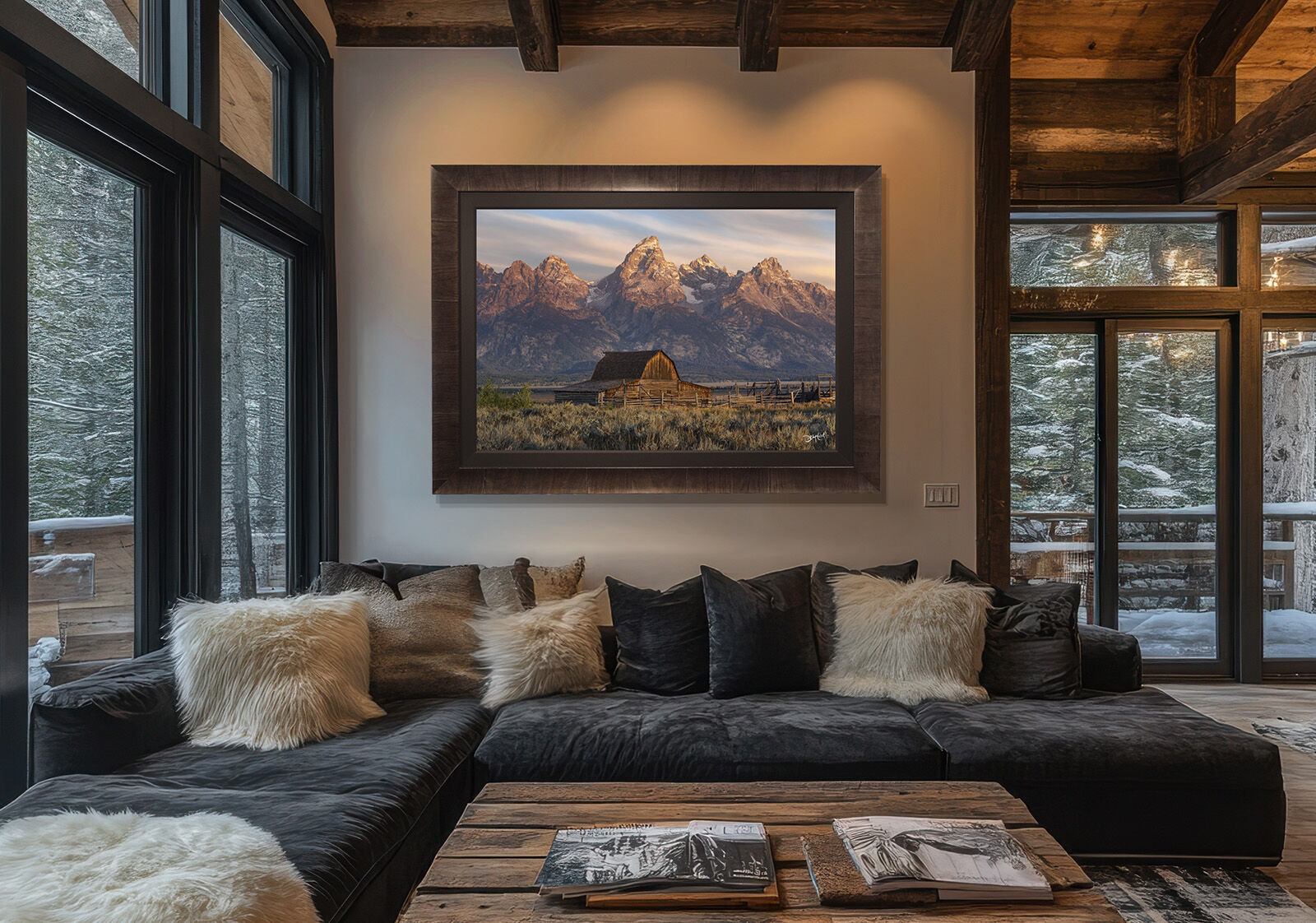
That authenticity creates a stronger emotional connection for many collectors, particularly those drawn to travel, nature, and personal experience.
Photography also preserves the immense scale and detail of mountain environments in a uniquely believable way. The viewer can imagine standing there. Feeling the cold air. Watching weather move through the landscape. Remembering places they have visited — or places they still hope to experience someday.
Bringing the Mountains Home
The enduring appeal of mountain photography comes from more than scenery alone.
These landscapes represent stillness, perspective, adventure, and connection to something larger than everyday routine. In a home, they can transform not only how a space looks, but how it feels to spend time there.
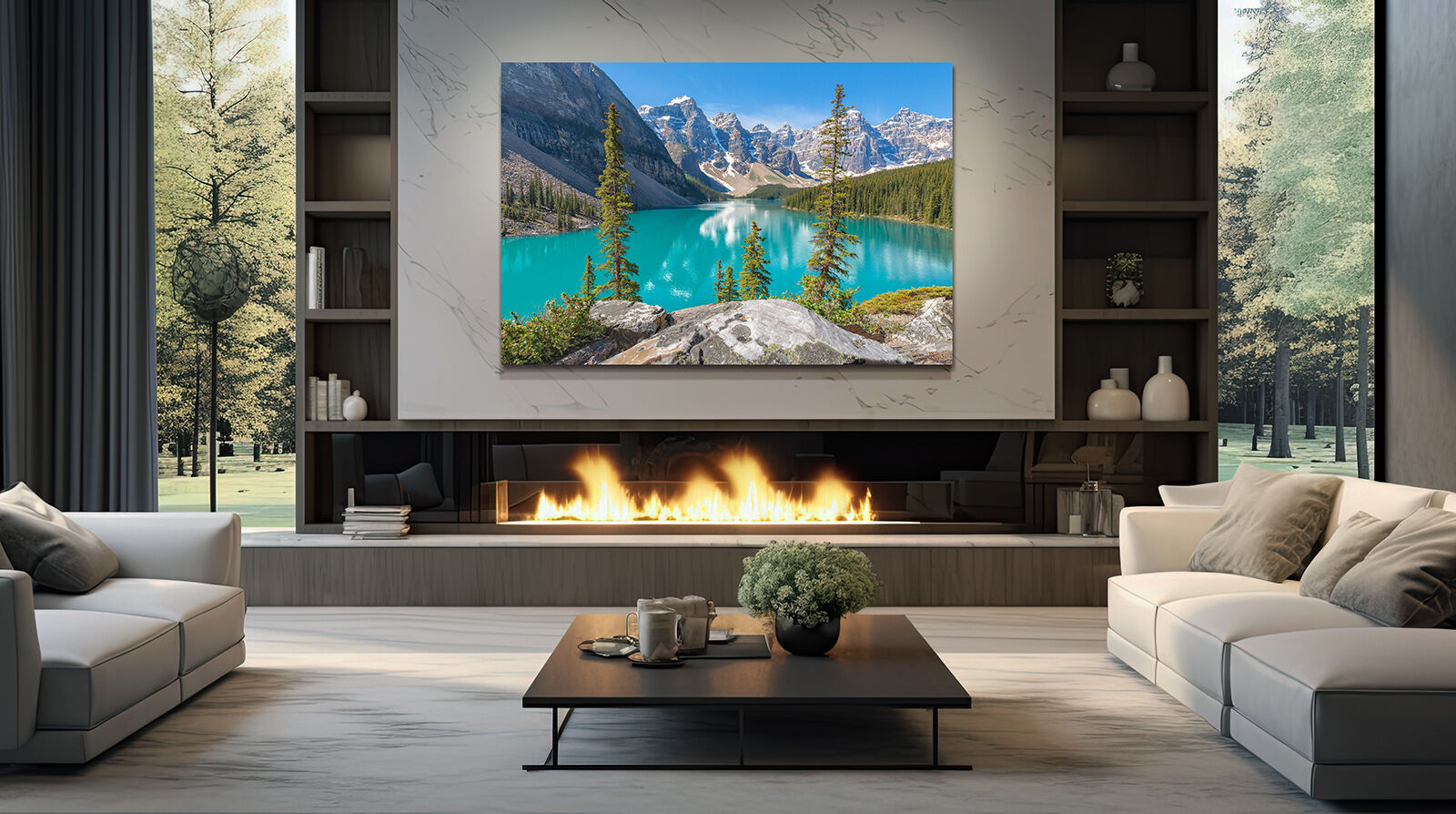
In minimalist interiors, mountain photography often acts as a grounding element — adding atmosphere and emotional presence without overwhelming the room itself. Larger landscapes create depth and openness, while quieter scenes introduce calm and balance.
Whether inspired by the Canadian Rockies, Icelandic highlands, or remote alpine landscapes elsewhere in the world, mountain photography invites that atmosphere indoors in a lasting and meaningful way.
Choosing a photograph for your home is a personal decision, and the most meaningful pieces are often those that create a lasting connection with a place or experience. My guide on How To Buy Fine Art Photography explores how to select artwork that you will appreciate for years to come.
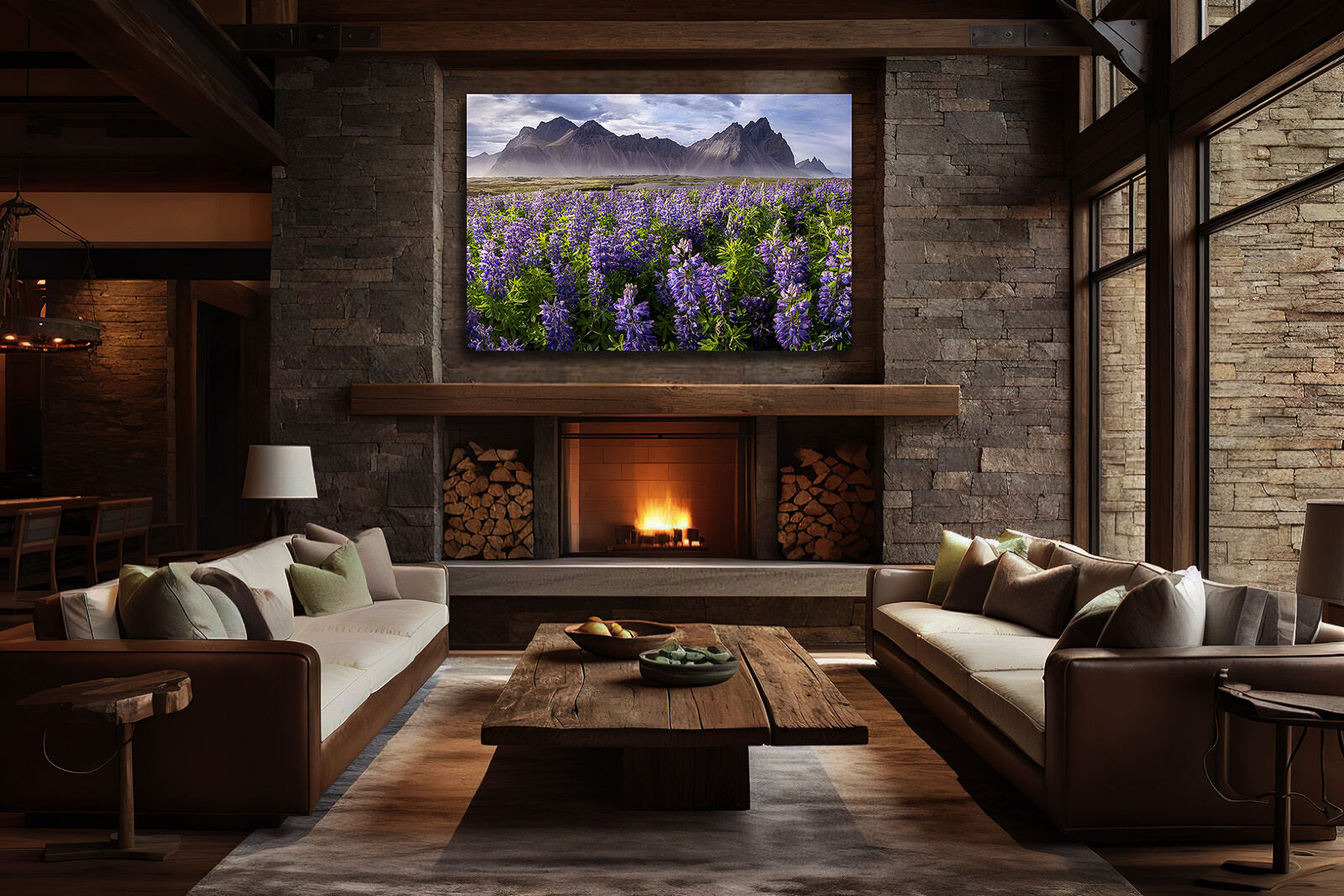
If you are looking for a piece that reflects a specific place, atmosphere, or memory, explore my mountain photography collections, including Canadian Rockies landscapes and other alpine scenes from around the world.
