
Sunwapta Falls Jasper: Visitor & Photography Guide
Sunwapta Falls is one of the most iconic waterfalls in Jasper National Park, renowned for its powerful blue glacial waters cascading past a unique island formation into a 60-foot gorge. Located along the stunning Icefields Parkway, this waterfall is a must-see for visitors and a favourite subject for fine art photographers.
In this guide, I’ll share practical tips for visiting Sunwapta Falls, explore its history and geology, and provide insights from my personal photography experience capturing its beauty in high-quality fine art prints.

Sunwapta Falls Location & Access
Sunwapta Falls is easily accessible along the Icefields Parkway (Highway 93), a 232 km (144 mi) scenic route linking Lake Louise to Jasper. The parkway is famous for alpine lakes, glaciers, waterfalls, and breathtaking mountain vistas.
If you are in the area for an extended period, check out my Icefields Parkway Photography Guide which covers 25 of the best photo locations.
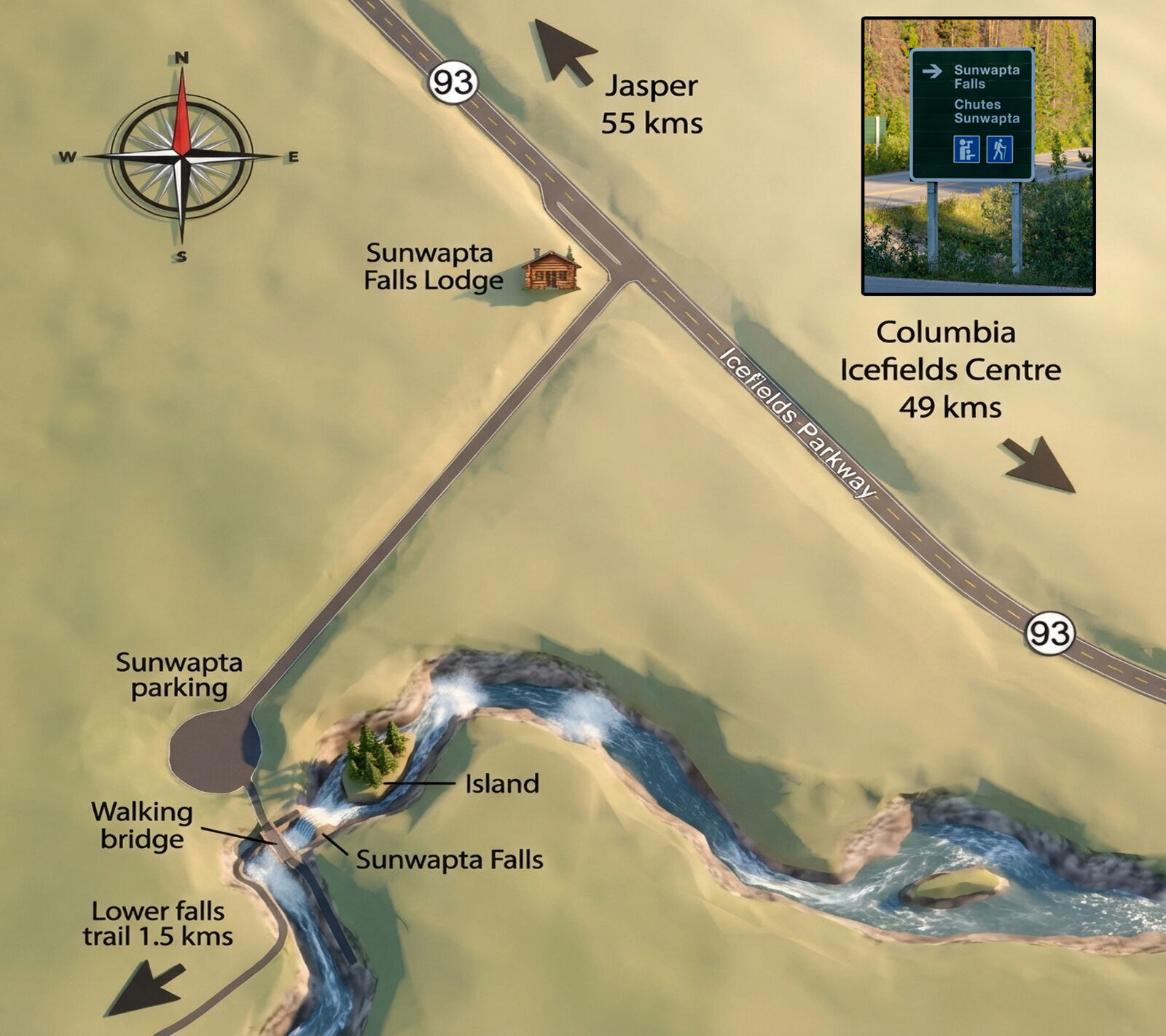
Directions:
- Traveling north from the Columbia Icefields Visitor Centre: 49 km
- Traveling south from Jasper town: 55 km
Parking & facilities:
- The parking lot is a short 600 m access road from the highway
- Picnic tables and outhouses are available
- Sunwapta Falls Rocky Mountain Lodge nearby offers dining, a gift shop, and accommodations. They are open seasonally from mid May to late October
Pro Tip: Arrive early in the morning to avoid crowds and capture the falls in the best light for photography.
Visiting Sunwapta Falls: Trails & Viewpoints
The main falls are visible from several viewpoints, including a walking bridge suspended above the gorge. While the bridge offers a unique perspective, it is somewhat obstructed by trees and bounces slightly as people cross — not ideal for achieving sharp photos. The best spots are down through the trees either on the left or right sides of the gorge.
Lower Sunwapta Falls Trail
A quiet 1.5 km trail descends gently through the forest to Lower Sunwapta Falls, which features three smaller drops. Although they are not as spectacular as the main falls, the walk is suitable for all ages and offers a peaceful escape from the busier area if you have the time to spend.

Visitor tips:
- Wear sturdy shoes — the trail can be damp
- Bring water and snacks if planning to explore the lower falls
- Return the way you came; the trail ends at the lower viewpoint
History & Formation of Sunwapta Falls
The name “Sunwapta” comes from the Stoney Indigenous word for “turbulent water”. Although Indigenous peoples inhabited the Canadian Rockies for thousands of years before the Europeans arrived, geologist A.P. Coleman officially recorded the falls in 1892.
Sunwapta Falls was formed approximately 8,000 years ago as glaciers receded, creating hanging valleys in the alpine landscape. The smaller Sunwapta River tumbles into the deeper Athabasca Valley, creating the waterfall we admire today.

Fun fact: Hanging valleys and waterfalls like Sunwapta are classic signs of glacial geology in the Canadian Rockies.
Photography Tips for Sunwapta Falls in Jasper National Park
Capturing Sunwapta Falls in fine art quality requires patience, preparation, and an eye for natural light. Due to its location within the valley, the best light occurs at sunrise and in the early morning. The highest water flows occur from mid June to early July.
Personally, I prefer late September during less flow to capture more of the rock formations, while cooler temperatures offer a better chance of mist and fog in the valley behind. I have photographed Sunwapta Falls repeatedly over multiple seasons, allowing me to refine these recommendations through firsthand experience.
Best vantage points
- Avoid the bridge for photography; it’s unstable and the view is obstructed
- Look for ledges or open areas on the left or right side the gorge for unobstructed compositions. Be cautious near the edges
- Morning light and misty conditions can create dramatic effects

Equipment & techniques
- Horizontal or vertical compositions are possible
- Use a tripod for stability
- Use your lowest ISO possible for cleaner images free of digital noise
- Try shooting multiple frames using different focus points throughout your composition. Vary the shutter speeds to help balance motion blur in the water with sharp backgrounds
- Blend the best portions from each shot in post-processing to achieve full depth of field and precise clarity

My two favorite images, “Sunwapta” and “Harmony”, were captured on a cold September morning with perfect symmetry between the island, river, and falls — a rare combination of light and atmosphere.


Limited Edition Fine Art Prints
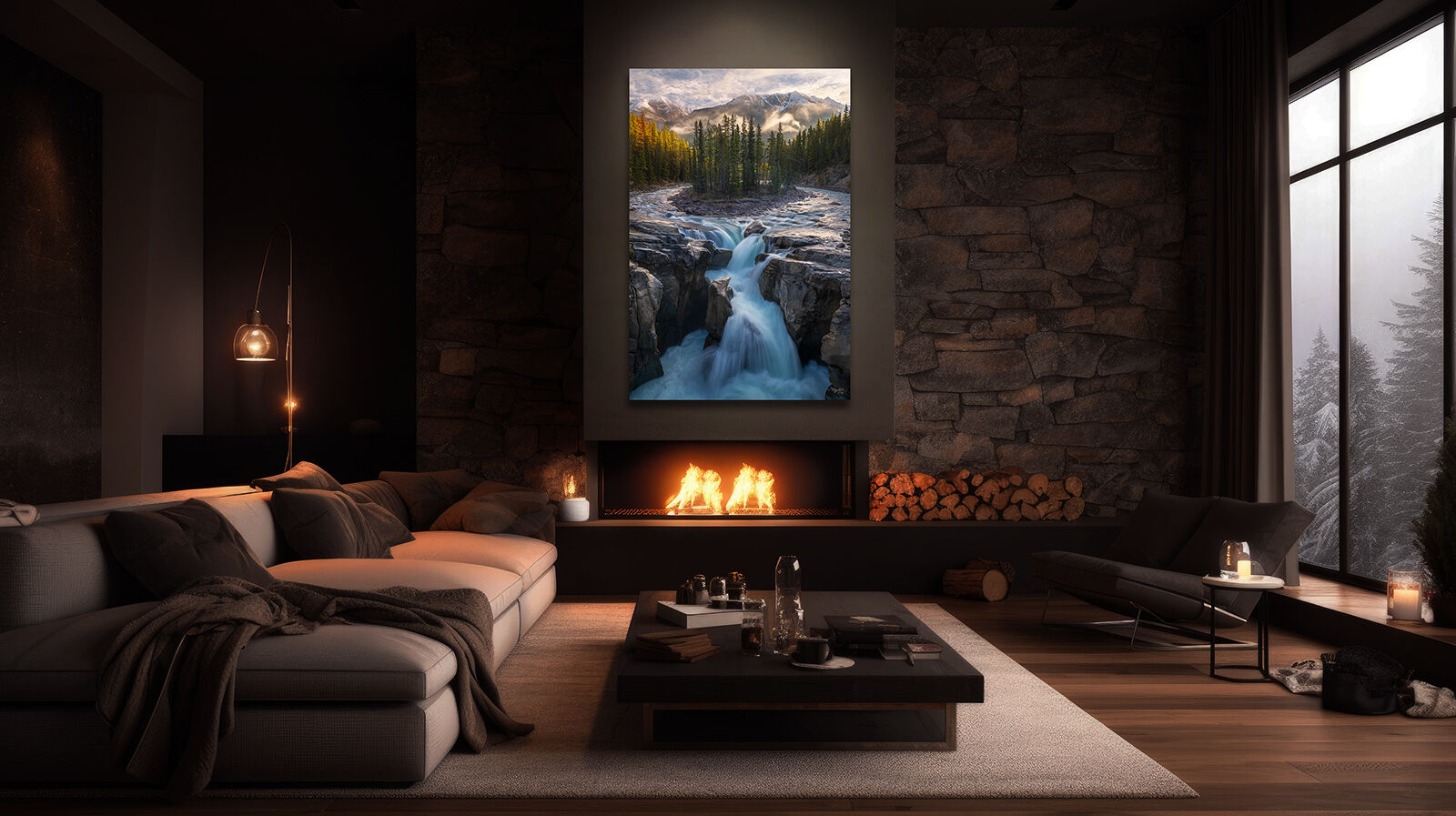
Bring the beauty of Sunwapta Falls in Jasper National Park into your home with limited edition fine art prints, available in multiple mediums:
- Lumachrome® TruLife® acrylic (framed or unframed)
- ChromaLuxe® HD metal prints
- Fujicolor® Pearl paper prints

You can learn more about these spectacular mediums on my Print Styles page.
I also offer a free mockup service, allowing you to see a print on your wall before purchasing.

These prints are not just decoration — they’re showpieces designed to capture the essence of Jasper’s waterfalls and bring the outdoors into your living space.
FAQ: Sunwapta Falls Visitor & Photography Guide
1. How far is Sunwapta Falls from Jasper town?
- Approximately 55 km south along the Icefields Parkway in Jasper National Park.
2. Is there a trail to Lower Sunwapta Falls?
- Yes, a 1.5 km gentle trail leads to a quiet viewpoint of the lower falls.
3. Can I photograph Sunwapta Falls from the bridge?
- You can, but the view is partially obstructed and the bridge bounces. I recommend alternative ledges for better compositions.
4. What is the best time to visit Sunwapta Falls?
- Early morning offers softer light and fewer crowds. Cold September mornings can provide dramatic mist and atmospheric conditions.
5. Are there facilities or restaurants at Sunwapta Falls?
- Yes, the Sunwapta Falls Rocky Mountain Lodge offers dining, a gift shop, and accommodations. They are open seasonally from mid May to late October. Picnic tables and outhouses are available at the parking area.
